THE DISCOVERY
A Lucky Strike: Unearthing the Emperor’s Vanguard
History rarely announces itself. More often, it is stumbled upon in the dirt, hidden in a cave, far away from gazing eyes. But then somebody starts digging, exploring, or they are in need of some water. Exactly what happened in our case.
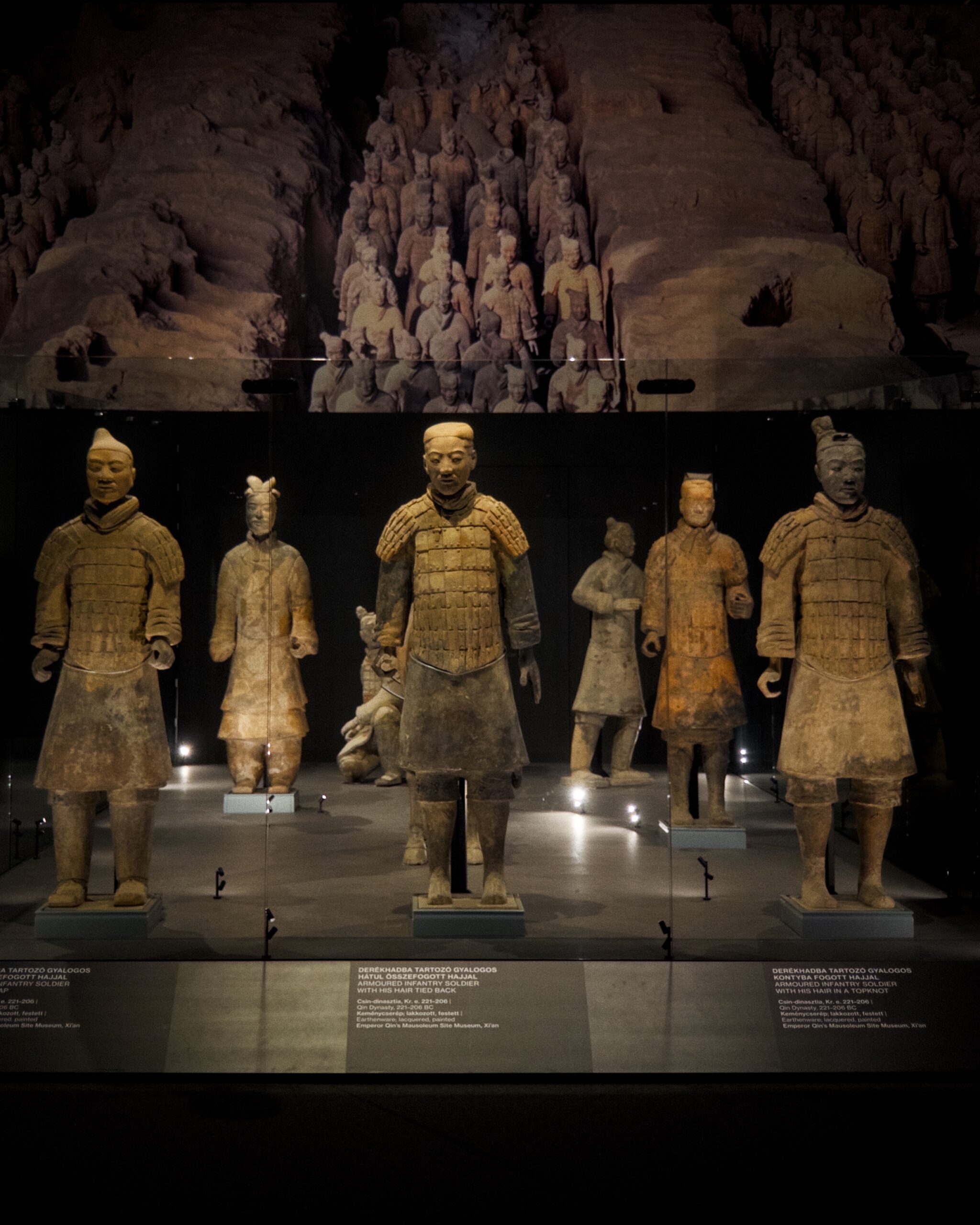
In the spring of 1974, a group of local farmers in China’s Shaanxi province was simply trying to dig a well to combat a severe drought. Instead of water, their shovels struck hard, reddish earth, eventually revealing the terracotta head of a soldier. Without realizing it, they had just cracked open a time capsule that had been sealed for more than two millennia, unearthing what would become recognized as one of the greatest archaeological discoveries of the twentieth century.
Beneath the rural soil lay an entire underground military encampment. These clay warriors had been waiting quietly in the dark, tasked with a singular, eternal mission: guarding the peace of China’s first emperor, Qin Shi Huangdi. For centuries, empires rose and fell above them, yet this silent vanguard remained perfectly undisturbed.
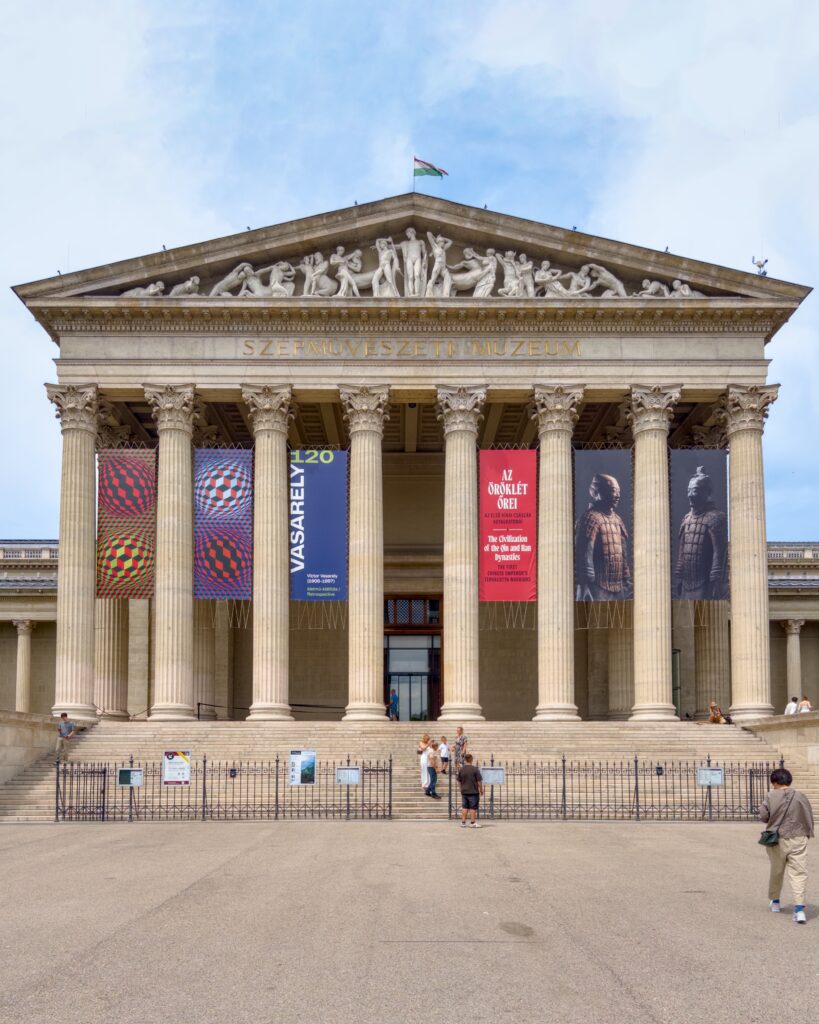
Recently, we had the privilege of standing face-to-face with these ancient protectors right here in Budapest. A curated selection of these beautiful relics traveled thousands of kilometers to offer Hungarians a rare connection to the ancient East. While the exhibition has since concluded, the profound weight of standing in the presence of these silent guardians lingers. We brought back a photographic glimpse of this vanguard so the journey of discovery can continue.
THE CRAFTSMANSHIP
Faces in the Clay: The Artisans Behind the Army
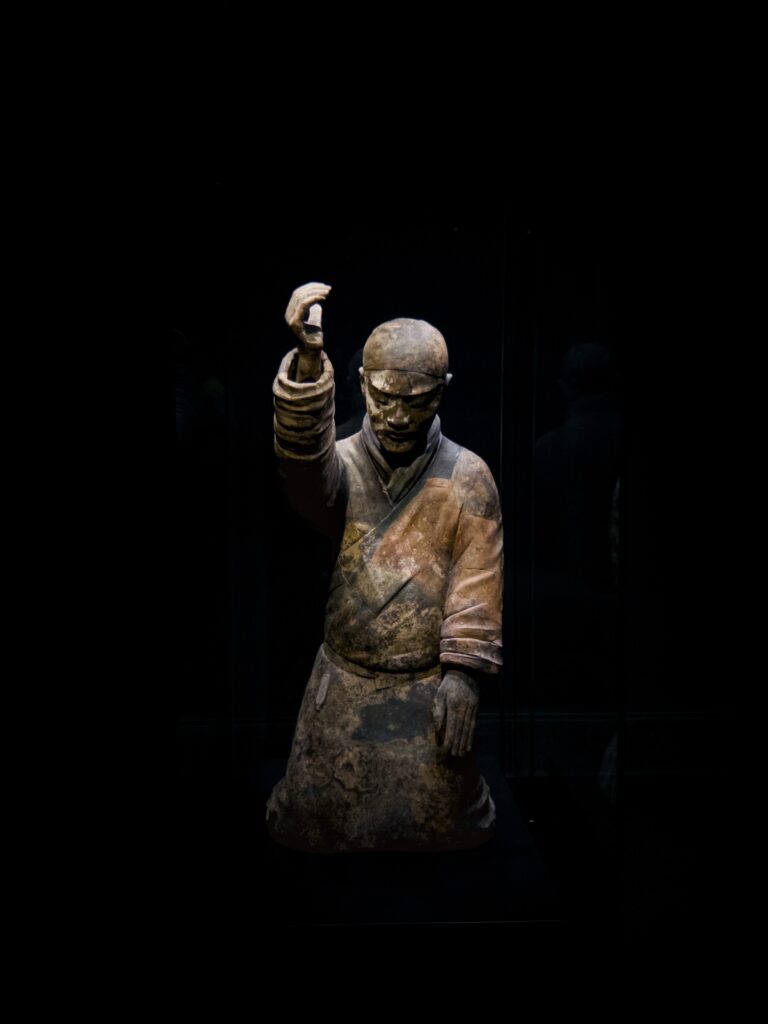
Humanity is defined by its unique variations—our quirks, our expressions, the way we carry ourselves. Remarkably, that same individuality applies to the Terracotta Army. When you look closely at the terracotta soldiers, you will recognize an unremarkable thing: no two faces are exactly alike.
The ancient sculptors tasked with this monumental project did not take the easy route. They didn’t simply pour clay into a standard, repetitive mold to make the troops. Instead, they approached the army as a collection of individuals. They crafted distinct hairstyles to denote rank and regional origin, modeled distinct facial expressions, and meticulously etched unique armor details for every single warrior.
It is a staggering achievement when you consider the logistics: there are more than 8,000 of these clay soldiers. As you walk past them, the personalities emerge. Some look fierce, their brows furrowed in concentration, ready for an imminent battle. Others seem incredibly calm, almost contemplative. A few even carry a subtle softness in their cheeks, looking as though they are about to crack a knowing smile. The immense dedication required to create a military force this personalized proves that imperial Chinese craftsmanship was not merely an exercise in massive industrial scale—it was a profound dedication to high artistry.
THE INNOVATION
Colors Brought to Life: A Digital Resurrection
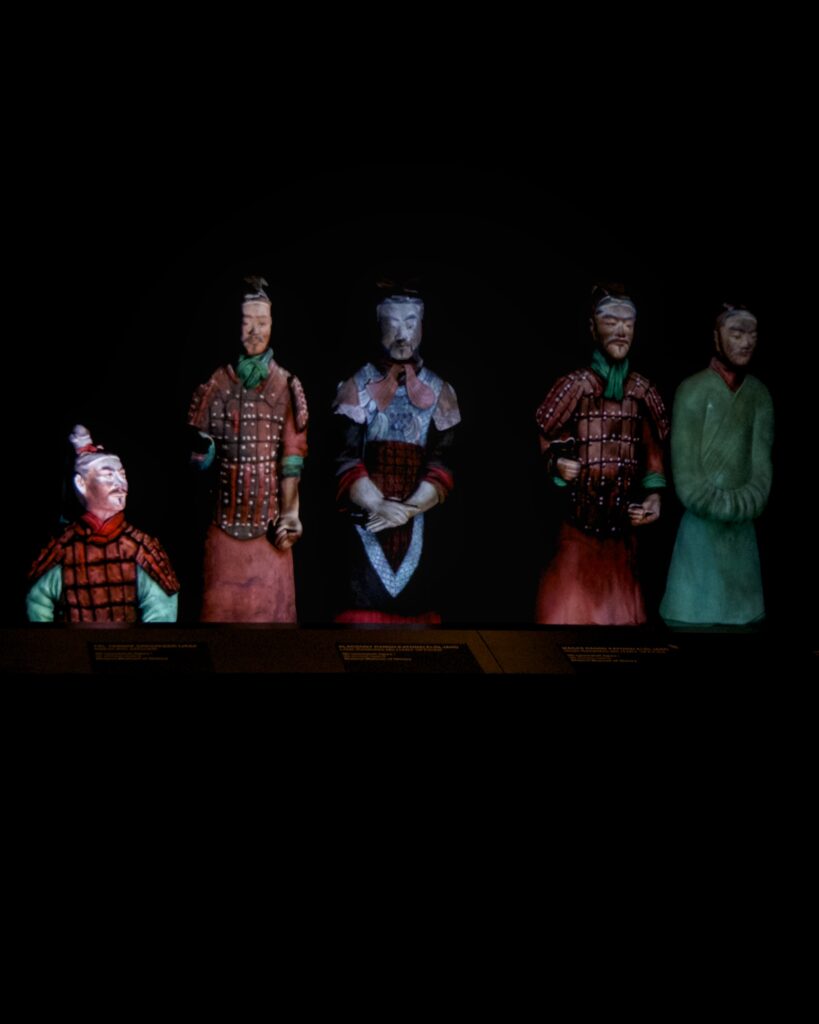
It is easy to look at these iconic figures, with their dusty, earthen tones, and assume they always carried this somber, monochromatic aesthetic. We are so used to seeing ancient artifacts stripped of their original glory by the passage of time. In reality, Qin Shi Huangdi’s army was once a dazzling, kaleidoscopic display. They were painted in vibrant, colors—rich crimson reds, bright purples, deep blues, and striking emerald greens.
Tragically, because the 2,200-year-old paint would curl and flake off within minutes of being exposed to the dry air during excavation, much of that original brilliance was lost almost instantly. To bridge this historical gap, the Budapest exhibition introduced a brilliant, modern method to turn back time.
Hungarian creators designed a breathtaking light mapping show specifically for this event. Utilizing cutting-edge 3D projection technology, vibrant light was perfectly mapped onto the contours of the statues, digitally “repainting” them right before our eyes. The transformation was startling. It was a magical, highly immersive experience that allowed visitors to see the warriors exactly as the emperor would have seen them, seamlessly blending ancient Chinese history with brilliant, modern Hungarian visual innovation.
THE AFTERLIFE
Beyond the Battlefield: The Emperor’s Eternal Court
While the formidable ranks of soldiers understandably steal the spotlight, understanding the Terracotta Army requires understanding the man who commissioned it. The emperor’s grand vision for the afterlife was not solely focused on military defense or eternal warfare. He was the ruler of the known world, and he fully intended to bring the beauty, luxury, and administration of his entire empire with him into the afterlife.
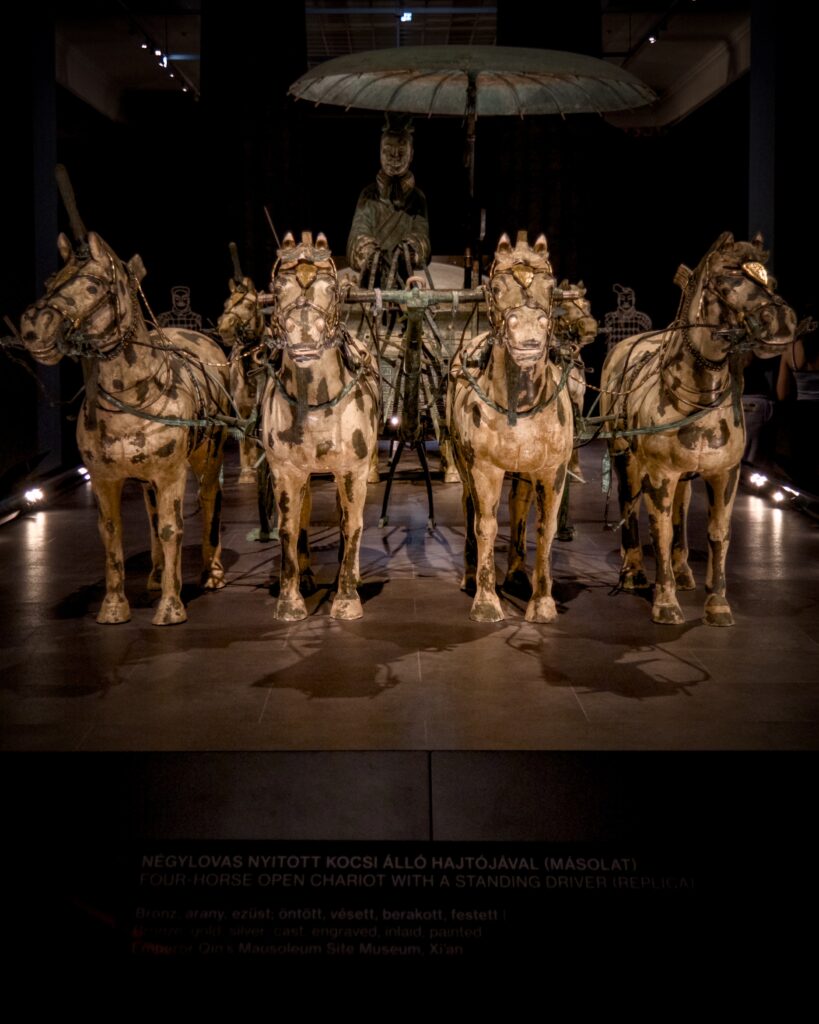
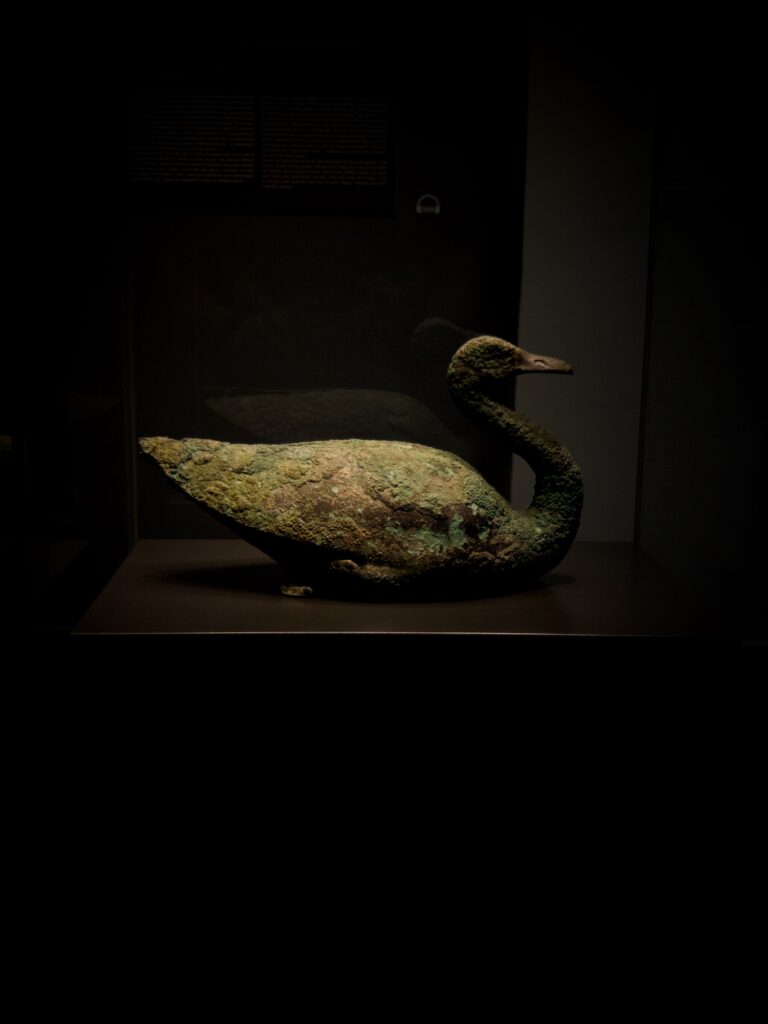
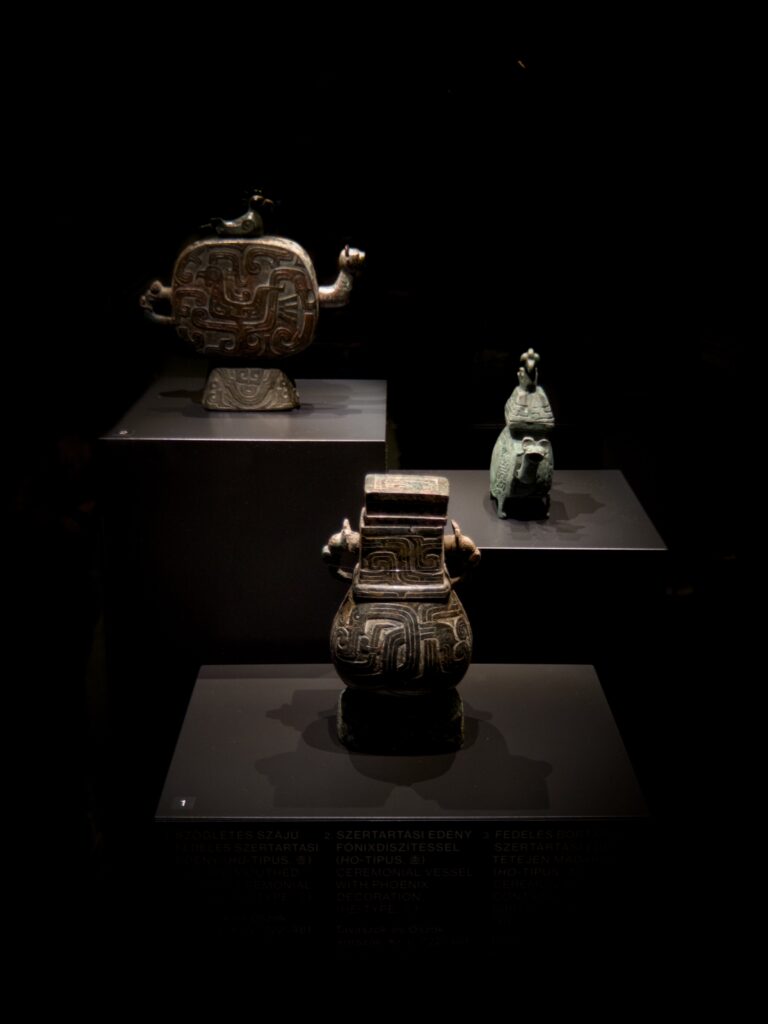
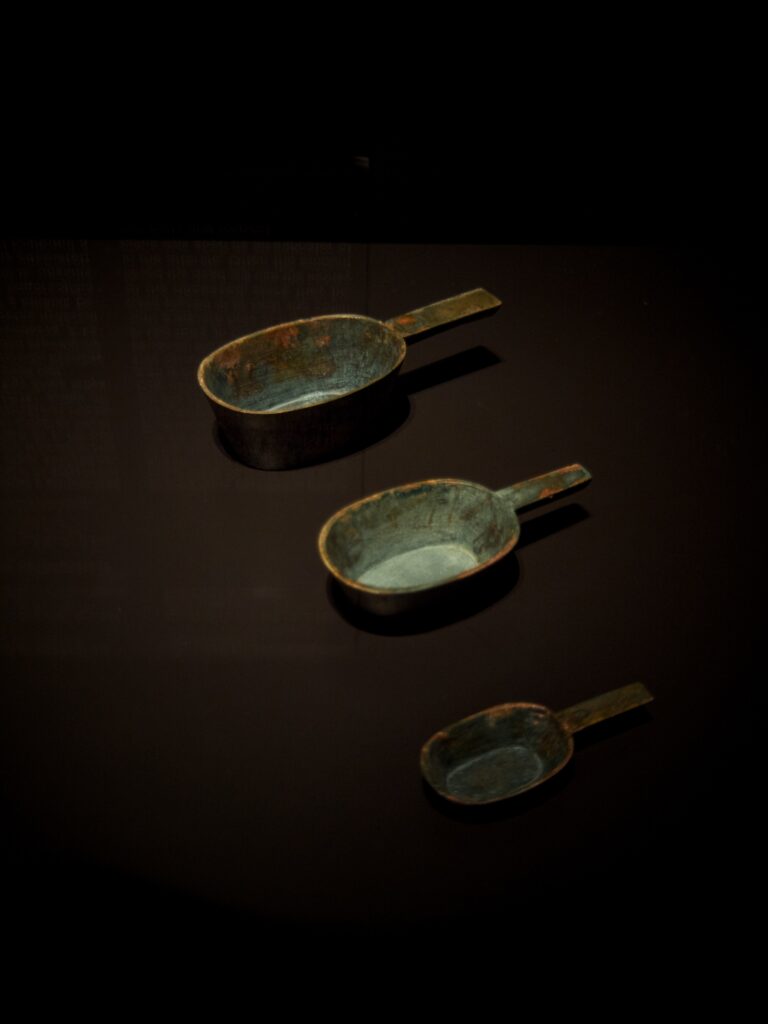
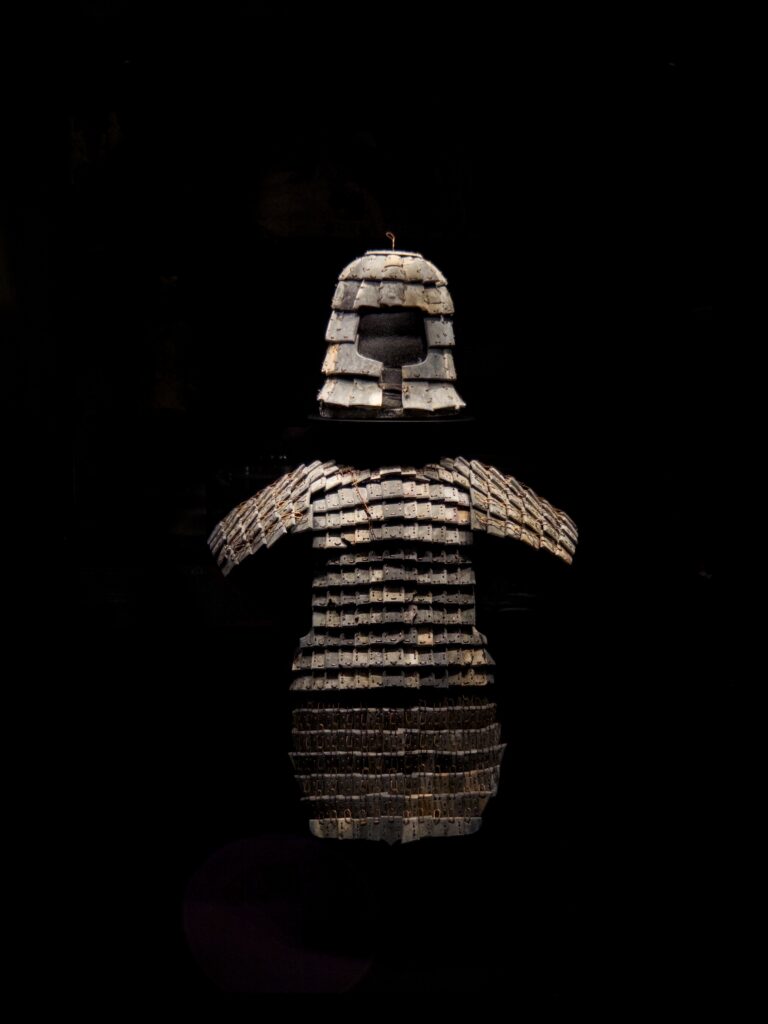
The exhibition beautifully highlighted this broader vision by moving beyond the infantry to feature the possessions of imperial life. The display included stunning replicas of grand chariots, designed not for battle, but for touring his spiritual domain. The inclusion of intricate bronze waterbirds, everyday ceremonial objects, and court officials paints a much richer picture.
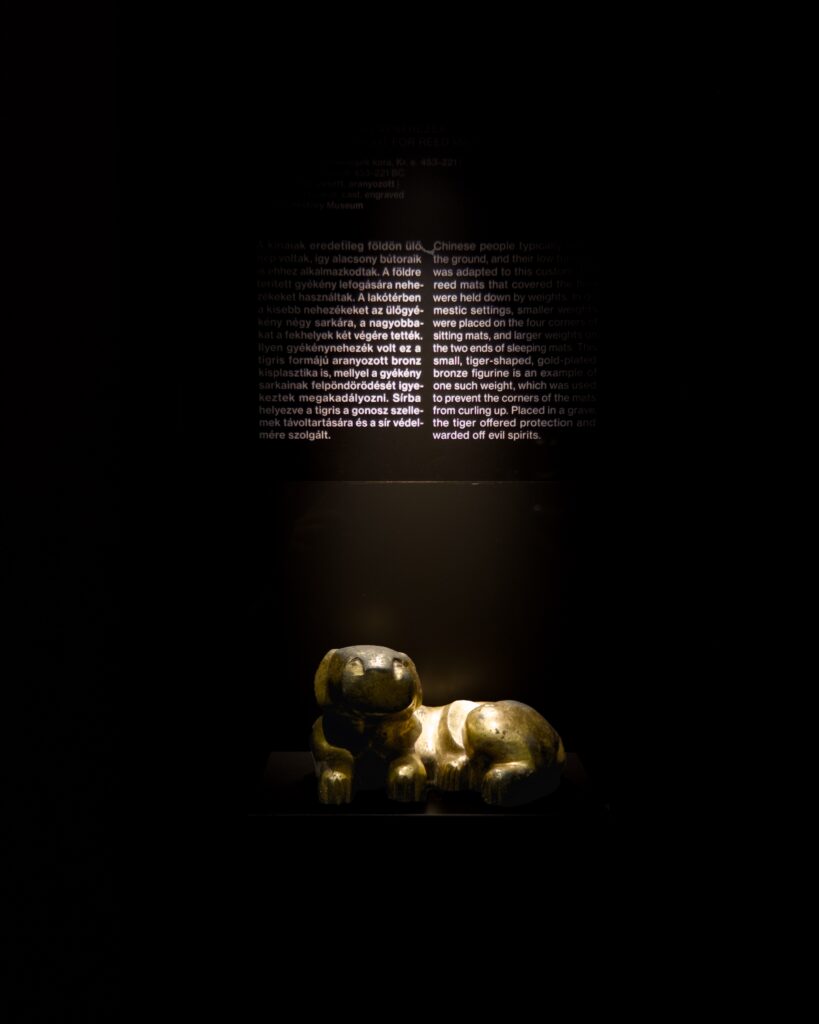
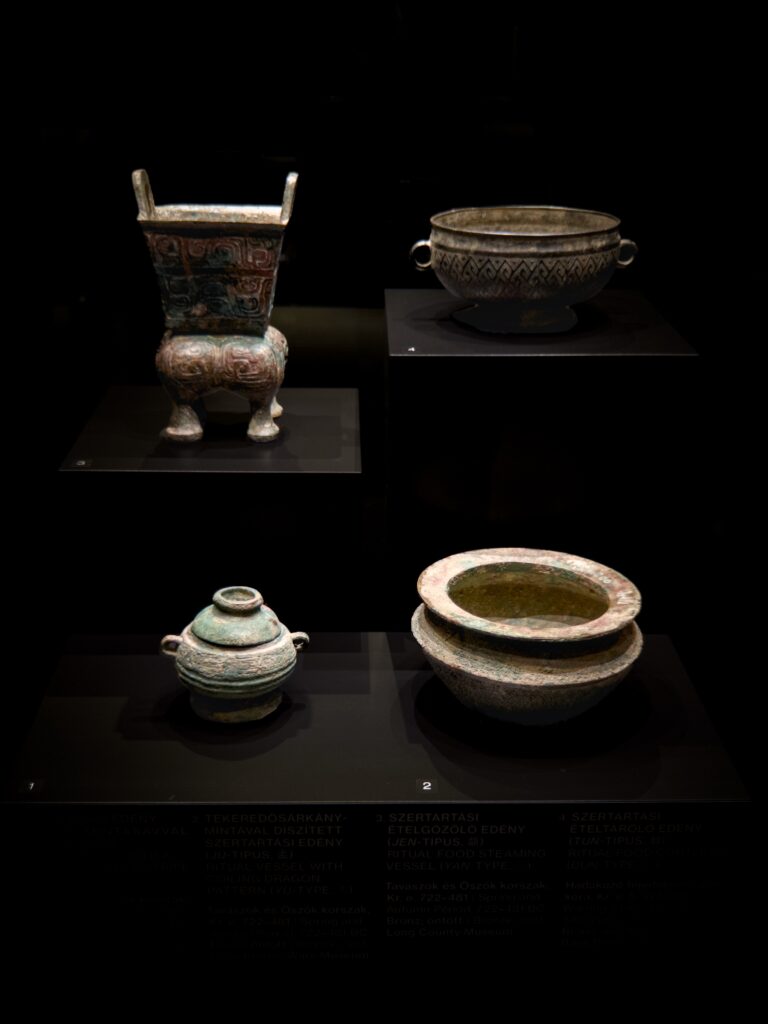
Golden tigers acting as weighted anchors for woven mats, elegant bronze swans meant to replicate the royal water gardens, and beautifully crafted vessels reveal a softer, profoundly more spiritual side of the Qin and Han dynasties. These artifacts serve as a beautiful reminder that the emperor wasn’t just preparing a fortress for an eternal siege; he was meticulously recreating an eternity of nature, opulence, and majestic court life.
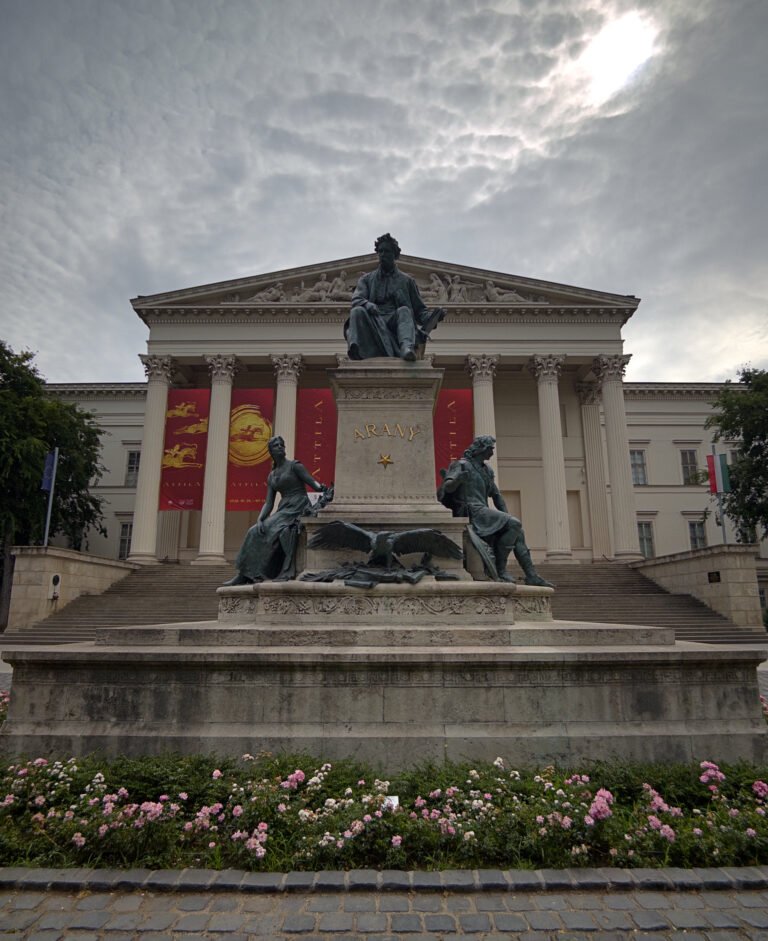
We would like to thank the Museum of Fine Arts for bringing this amazing memory to Hungary. Although this exhibition has already moved on, if you can, visit the museum because the permanent exhibitions also provide a great insight into the beauties of Hungarian history.