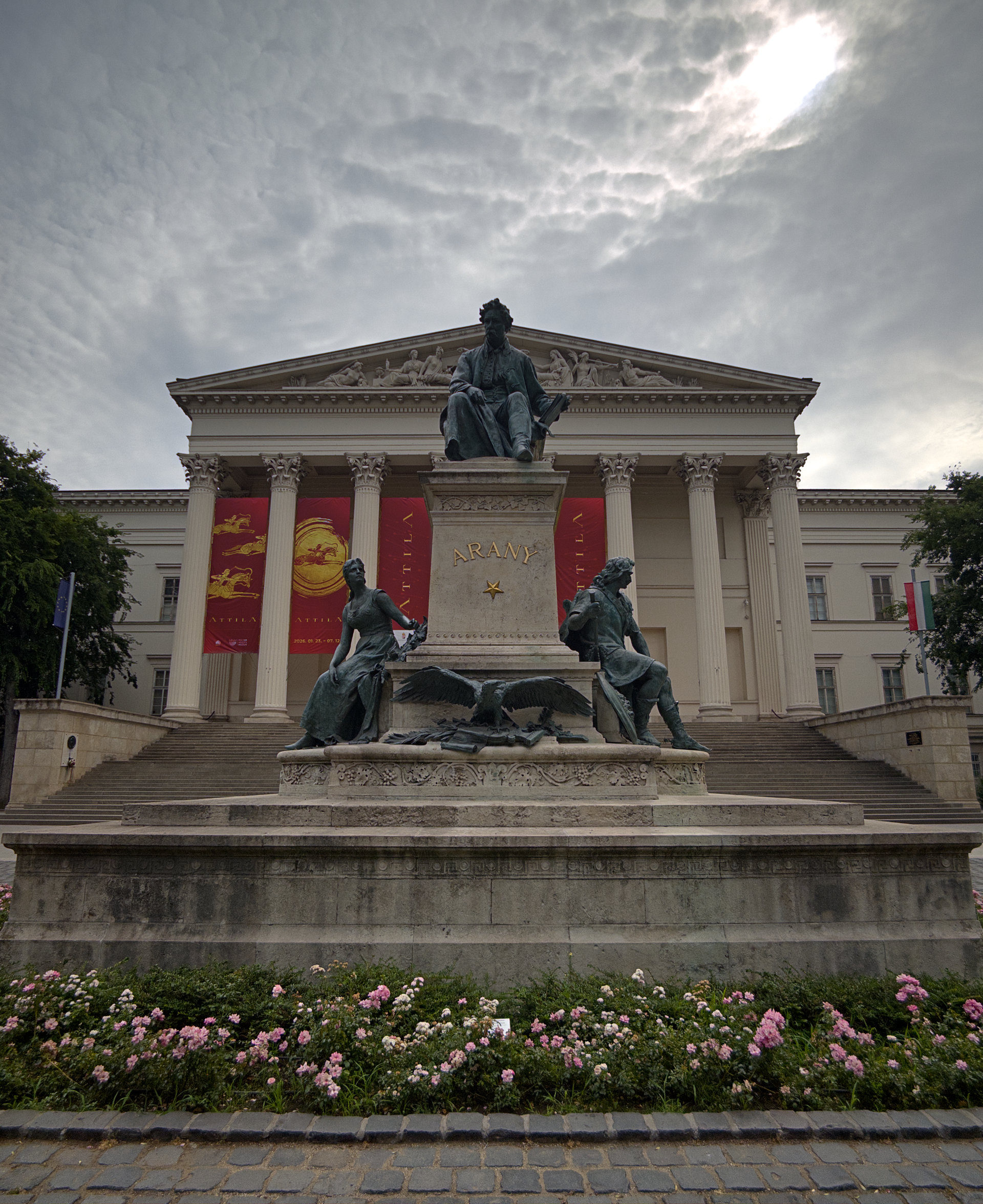
UNEARTHING THE SHADOW OF AN EMPIRE
The True, Untold Legacy of Attila and the Huns
There is a distinct shift in the atmosphere when you leave behind the Museum Boulevard of Budapest and get onto the grand stone steps of the Hungarian National Museum. You are stepping out of the present and crossing the threshold into one of history’s most misunderstood eras.
For centuries, our entire understanding of Attila the Hun has been dictated by the terrified, frantic writings of his enemies. Roman historians painted him as the “Scourge of God”—an apocalyptic force of nature, a harbinger of pure, untamed destruction meant to punish a decaying empire.
But as you move through the darkened, curated halls of this exhibition, that one-dimensional narrative shatters completely. Moving past the myth of the ruthless, bloodthirsty barbarian, you are immediately embraced by the staggering political mechanics of an ancient superpower. At its zenith, Attila’s empire was a massive, highly organized tributary confederation that stretched from the freezing Ural Mountains to the Rhine.
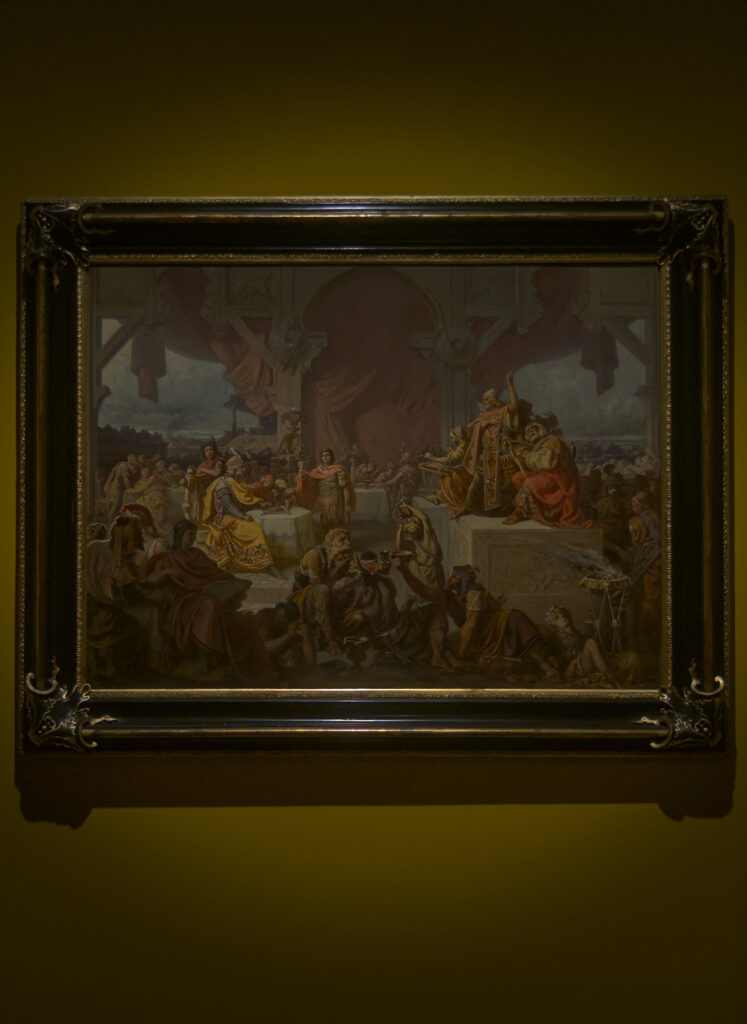
Attila forced both the Eastern and Western Roman Empires to the negotiating table, extracting thousands of kilos of solid gold in annual tribute, just to keep his devastating cavalry at bay. He operated a sprawling, sophisticated network of diplomats, spies, and international trade routes. Walking through these initial displays is an ongoing discovery of a superpower—a dynamic society that absorbed the tactical skills, languages, and technologies of the dozens of nations it brought under its soaring banner.
THE GOLD OF THE STEPPE
Masterpieces of the Hunnic Elite
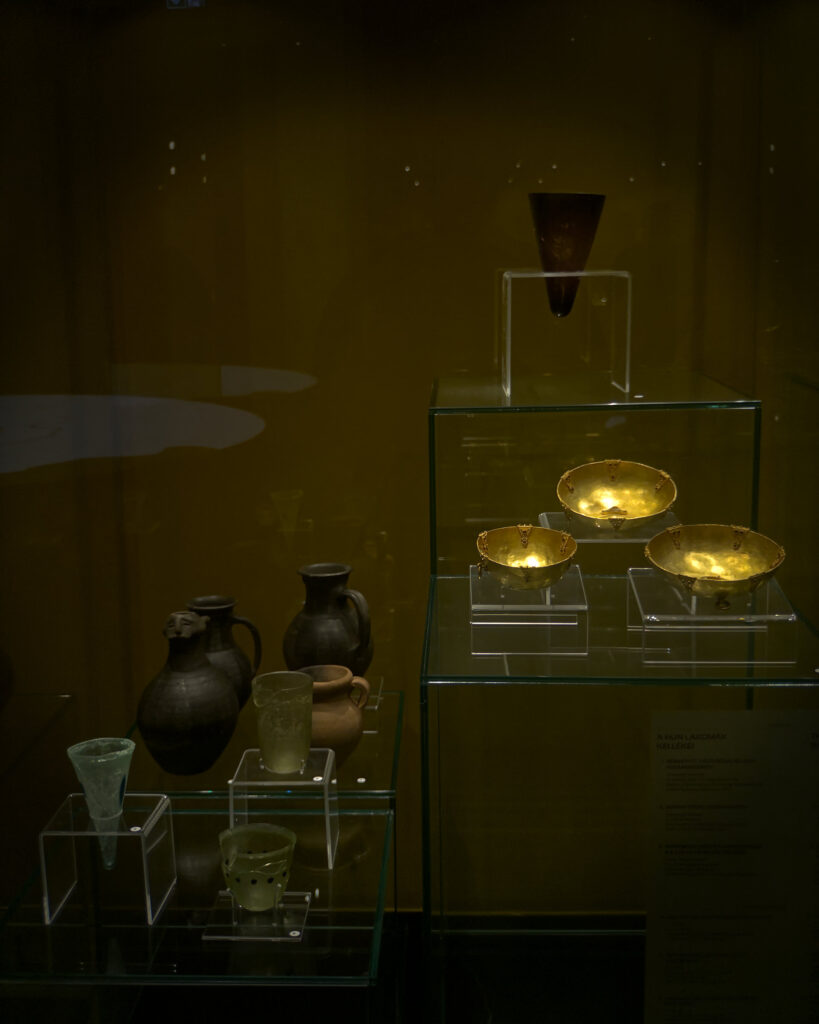
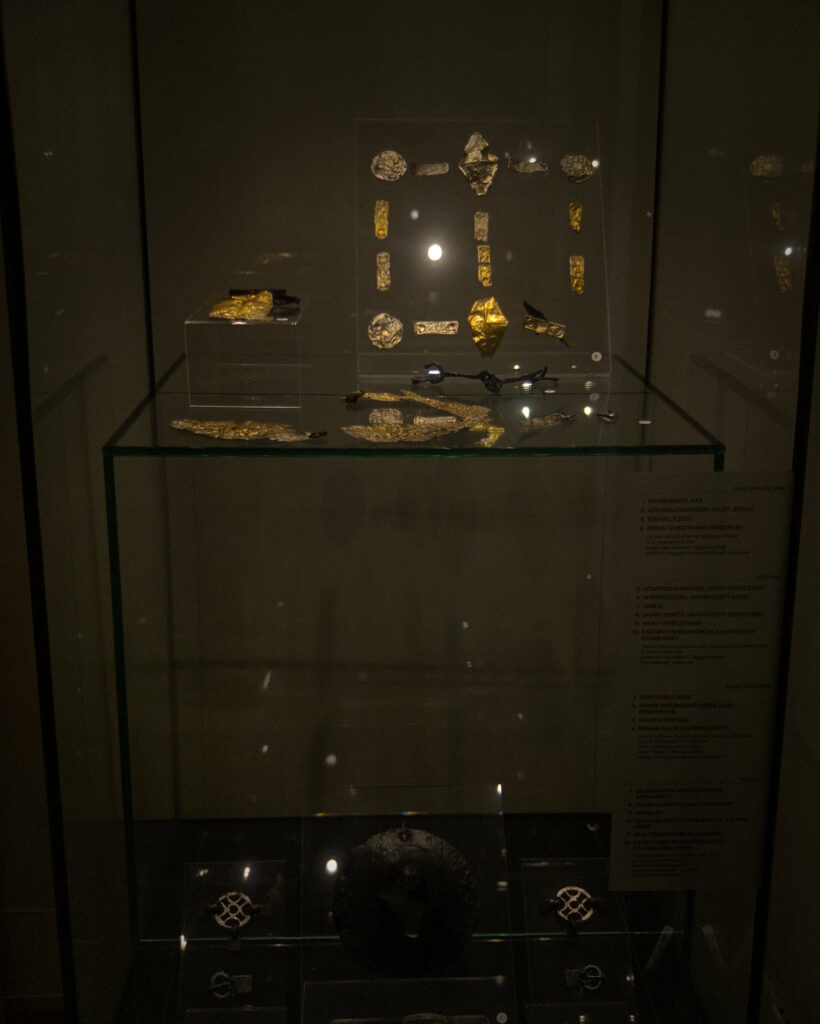
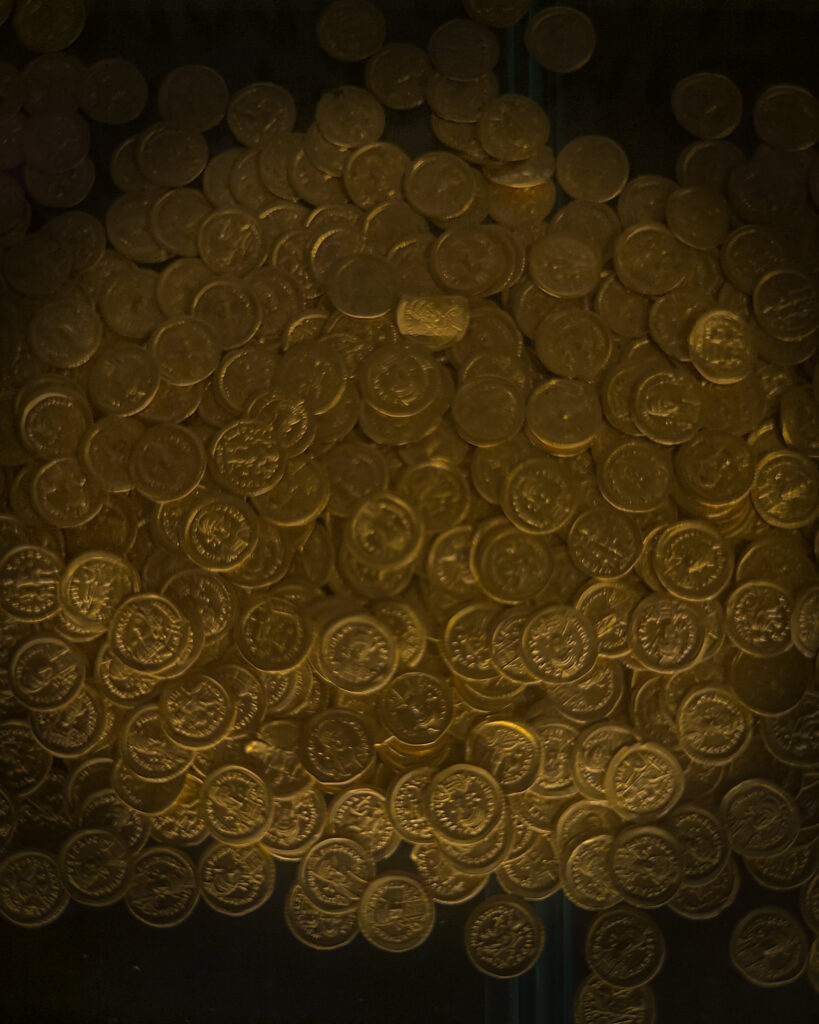
The true shock of the exhibition lies within the illuminated display cases. The Huns didn’t just hoard the vast Roman tributes they collected; they melted down millions of imperial solidi coins to forge an entirely new, distinct artistic identity. The volume and brilliance of the gold gathered here completely redefine our modern understanding of ancient nomadic craftsmanship. This was not the crude hoarding of pirates; it was the deliberate, calculated display of imperial majesty.
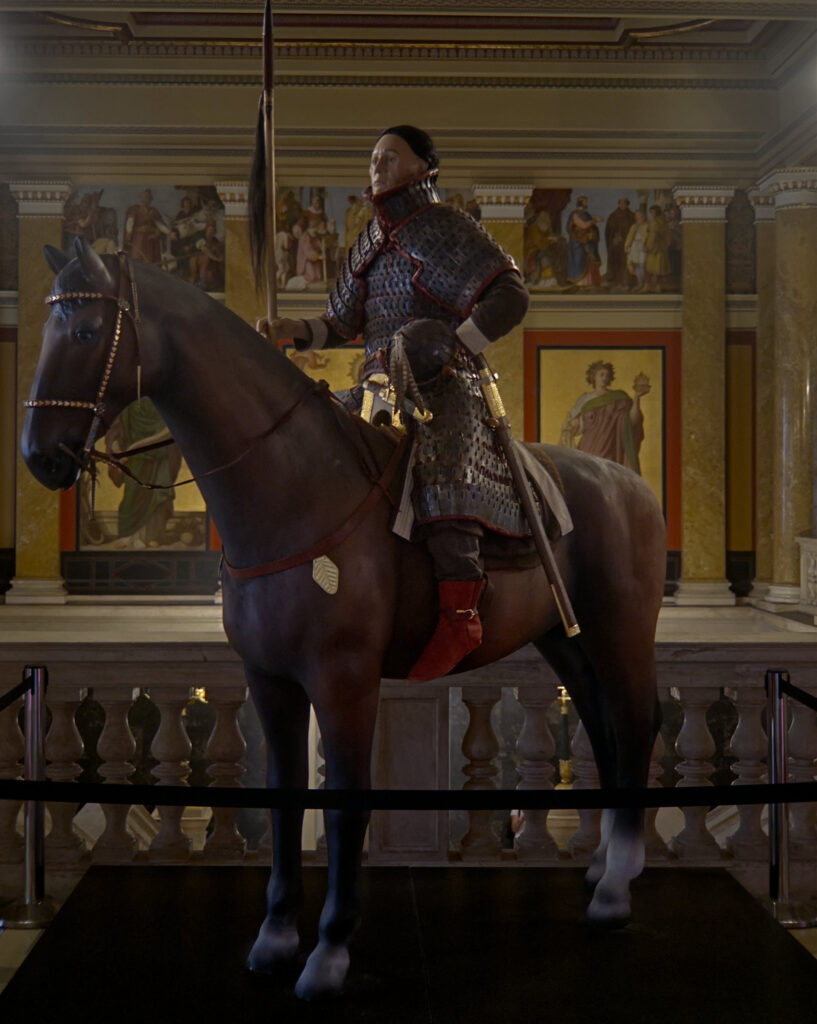
The Hunnic elite favored a breathtaking design known as the polychrome style—heavy, brilliantly forged gold inlaid with deep, blood-red garnets and colorful glass. You see this absolute mastery in the decorated horse tack of their legendary cavalry. For a Hun warrior, a horse was never just a mode of transport; it was a lethal weapon, a lifelong companion, and a moving throne. Adorning their saddles, bridles, and harnesses with elaborate, shimmering gold was the ultimate display of societal status and terrifying power.
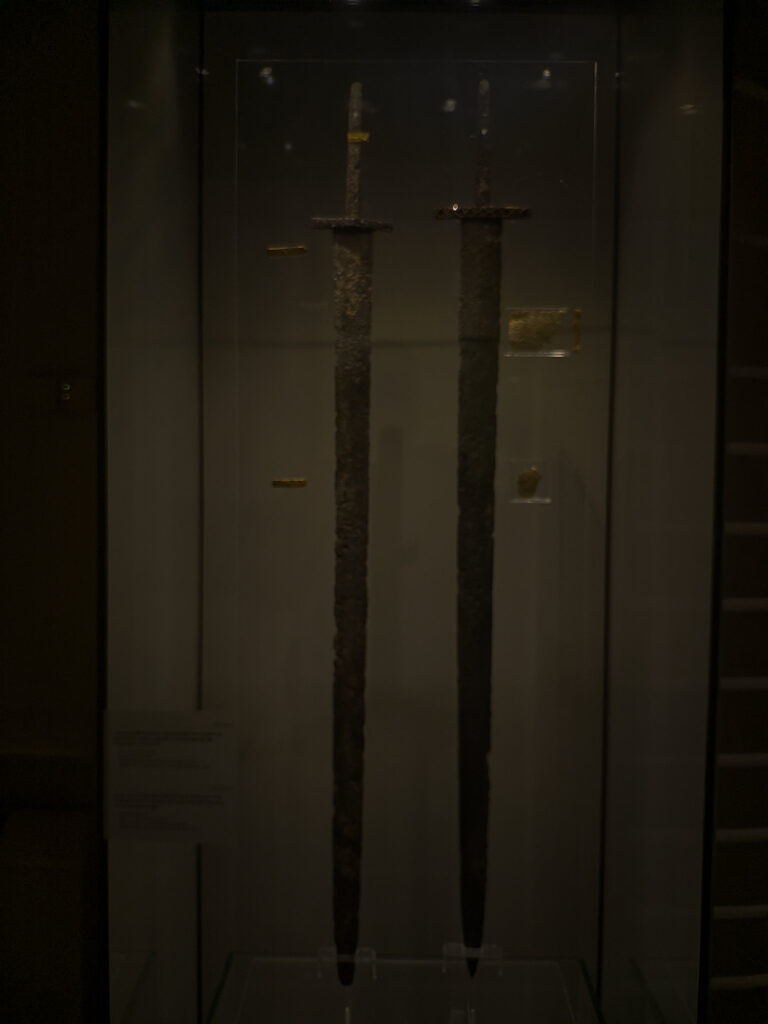
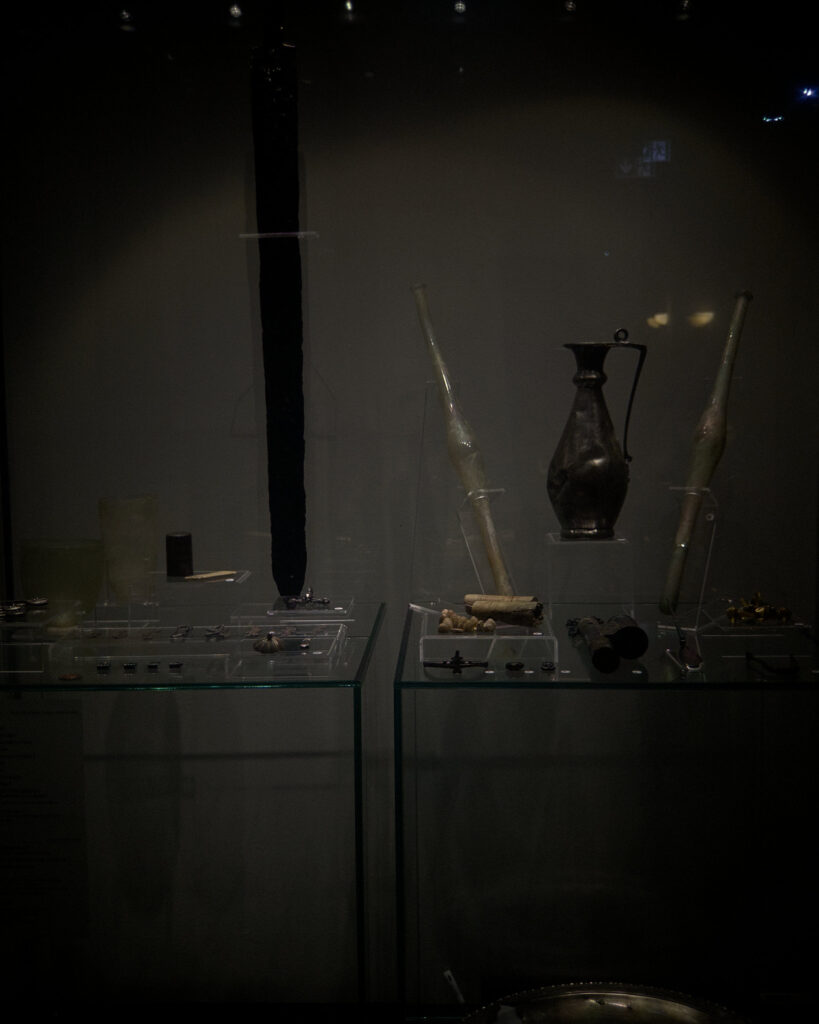
The exhibition showcases a staggering array of these masterpieces: gem-studded sword hilts that catch the light like fire, elaborate golden diadems worn by powerful noblewomen who commanded immense respect, and finely wrought, geometric belt buckles that functioned as the ultimate ancient status symbols. Getting up close to these tiny, perfect details proves that these nomadic riders were elite patrons of the arts.
THE RIVER’S SECRET
The Mystery of the Triple Coffin
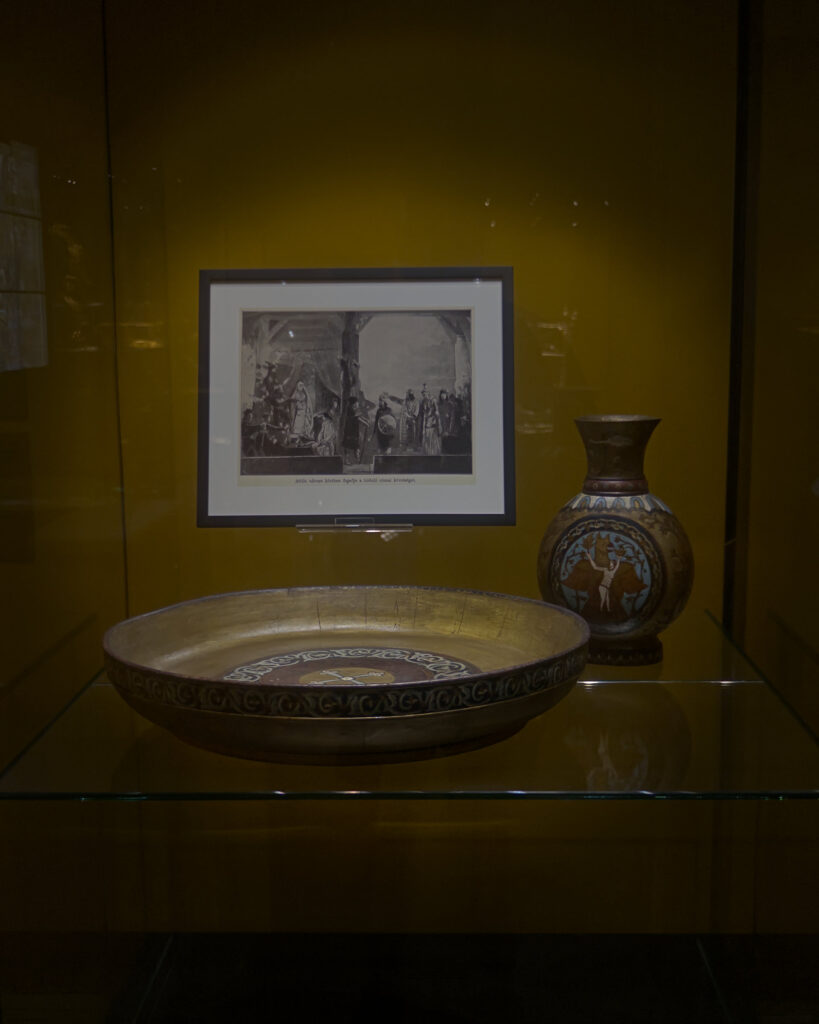
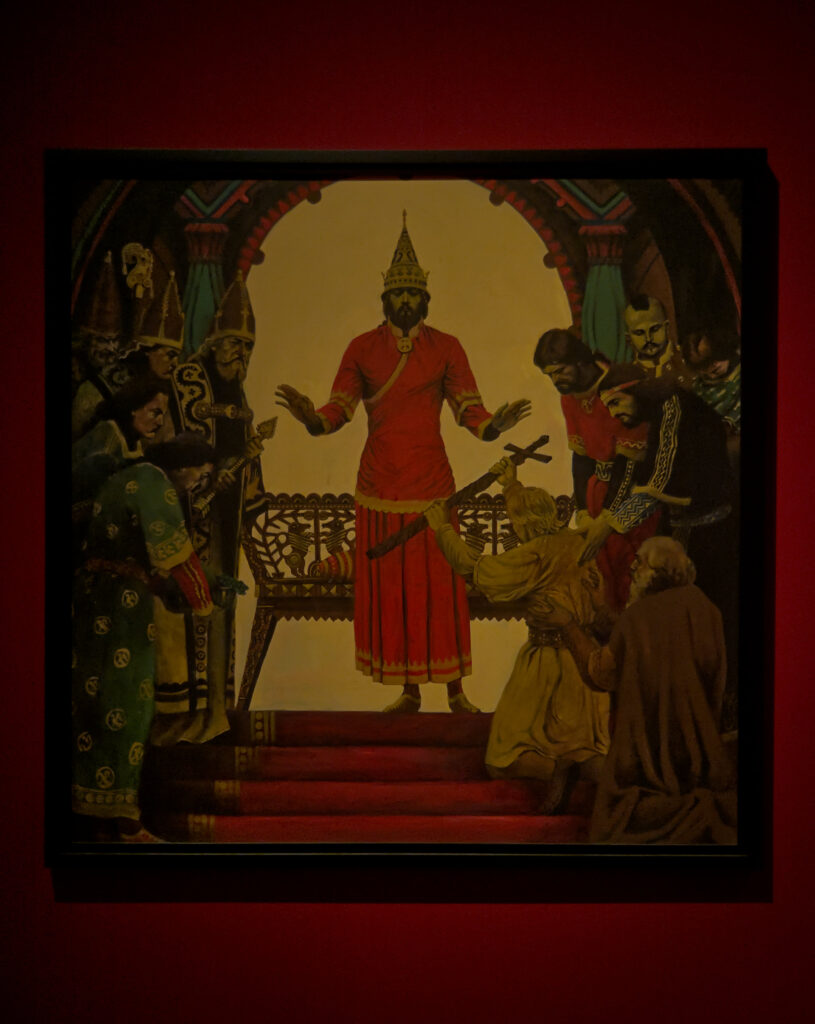
Perhaps the most captivating narrative of the entire exhibition centers around the sudden, chaotic end of the Hunnic king in 453 AD. The legend of his burial is a masterpiece of dark, romantic historical lore that has gripped the European imagination for over a millennium. According to ancient accounts, Attila did not die in glorious, open battle, but suffered a sudden, fatal hemorrhage on the night of his lavish wedding to a Gothic princess named Ildico.
When his elite guards found him the next morning, the empire plunged into a terrifying display of grief. According to the Roman historian Priscus, Attila’s fiercest warriors sheared off their hair and slashed their own faces deeply with their swords, declaring to the heavens that the greatest of kings should be mourned “not with the tears of women, but with the blood of men.”
To protect his body from grave robbers, scavengers, and vengeful enemies, his most loyal generals executed an astonishing engineering feat. They diverted the rushing, wild waters of a mighty river—long believed in Hungarian lore to be the unpredictable Tisza. In the muddy, exposed riverbed, they buried the Scourge of God in three nesting coffins.
The outer casket was forged of heavy iron, representing his unbroken, iron-fisted dominance in war. The middle casket was cast of pure silver, symbolizing the immense wealth and tribute he commanded from his trembling subjects. The inner casket was solid gold, reflecting his supreme, god-like power over the known world. Once the priceless treasures were laid beside him, the river was released back to its natural course, washing away all evidence of the excavation. The slaves who dug the grave were immediately slaughtered on the riverbank to ensure the secret would never be spoken.
To this day, the exact location remains one of history’s greatest, most tantalizing unsolved mysteries, leaving you wondering if the ultimate ancient treasure still sleeps somewhere deep in the Hungarian mud.
ECHOES OF THE KHAN
A Legacy Etched in the Carpathian Basin
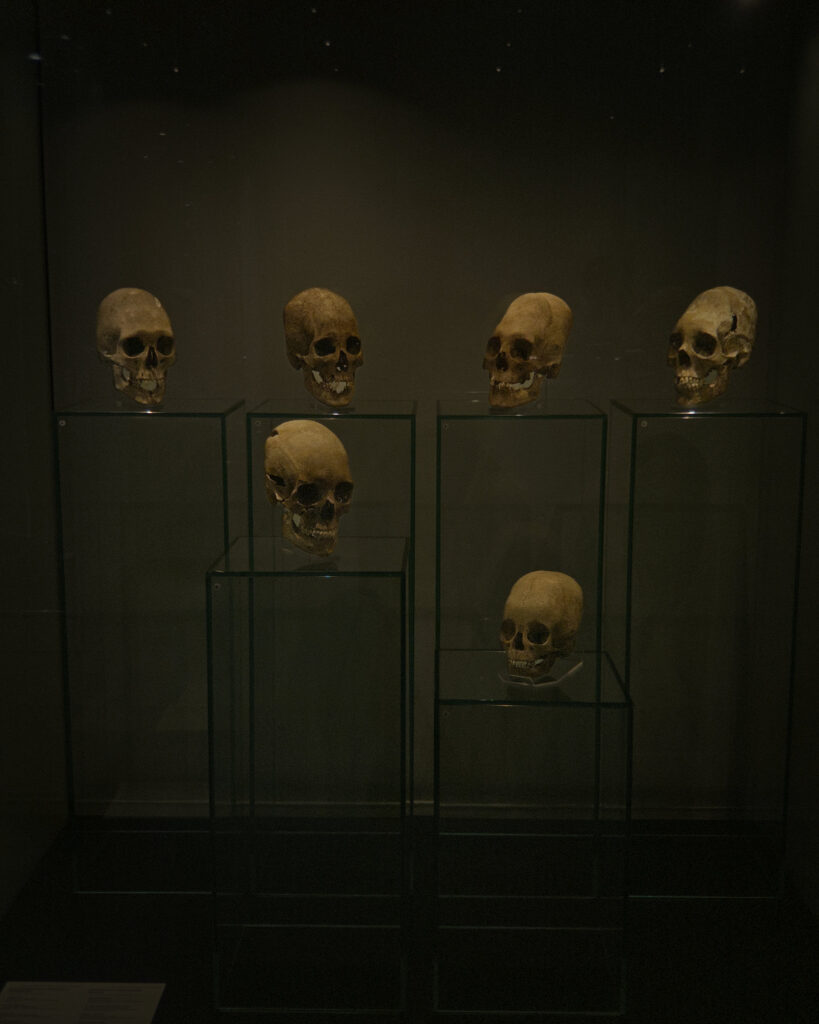
Walking through these silent, artifact-lined rooms is a face-to-face encounter with the raw forces that fundamentally reshaped early Europe. The Hunnic era was the devastating catalyst for the Great Migration Period. The sheer terror of their approach drove entire nations across borders, fracturing the continent and ultimately pushing the mighty Roman Empire toward its final collapse. It is even said that refugees fleeing the Hunnic advance into northern Italy sought desperate shelter in the muddy, inhospitable lagoons of the Adriatic, inadvertently laying the architectural foundations for what would eventually become the magnificent city of Venice.
Leaving the museum and stepping back out into the streets of Budapest, the experience deeply colors the way you look at the city and the vast landscapes surrounding it. Within a generation of Attila’s mysterious death, his sons fought bitterly over the throne, and the great empire shattered into dust.
Yet, the Huns never truly faded from the Carpathian Basin. They embedded themselves deeply into the folklore, the romantic myths, and the very identity of the region. Today, Attila remains one of the most popular and beloved names in Hungary, a complex, enduring nod to a shared, ancient heritage of power and mystery. It is a fascinating, ongoing discovery of a past that still echoes deeply through the valleys and rivers of the land—a legacy written in gold, iron, and the enduring myths of an empire that vanished like a shadow in the night.
We would like to thank the Hungarian National Museum for this amazing exhibition. It was a wonderful experience and we love to learn more and more about the Hungarian history.