BUDAPEST’S MINIATURE MARVELS
The Secret World of Mihály Kolodko
Budapest is globally celebrated for its grand scale—the sweeping curves of the Danube, the Gothic symmetry of the Parliament, and the imperial heights of the Buda Castle. Yet, some of the city’s most amazing cultural magic is completely invisible to those who only look up. Hidden at ankle level, tucked onto bridge railings, cobblestones, and stone ledges, is a parallel universe of miniature bronze statues. These tiny masterpieces are the work of Mihály Kolodko, an incredibly talented guerrilla artist who has transformed the entire Hungarian capital and some parts of Hungary into an interactive, open-air treasure hunt.
Kolodko’s genius lies in his subtlety and absolute lack of pretense. Nothing is officially announced; there are no museum plaques or velvet ropes. Instead, his sculptures simply appear overnight, waiting to be stumbled upon by curious explorers. Ranging from nostalgic symbols of Hungarian pop culture to witty, quiet nods to historical events, each piece packs an immense narrative punch into just a few inches of bronze. By intentionally shrinking his art, Kolodko completely flips the traditional relationship between a monument and its observer. He forces us to slow down, disconnect from the digital noise, and engage with the physical textures of the city. To find a Kolodko statue is to be let in on a beautiful, shared local secret, transforming a routine afternoon walk into an unforgettable journey of ongoing discovery.
THE RIVERSIDE GUARDIAN
The Statue of Chief Worm
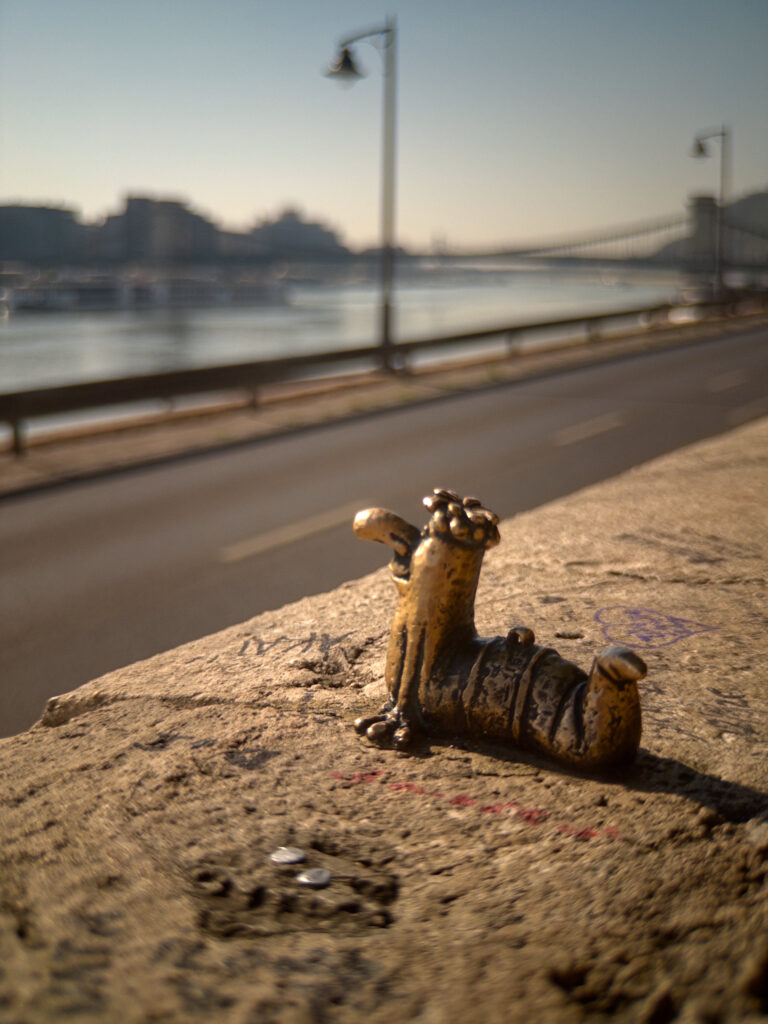
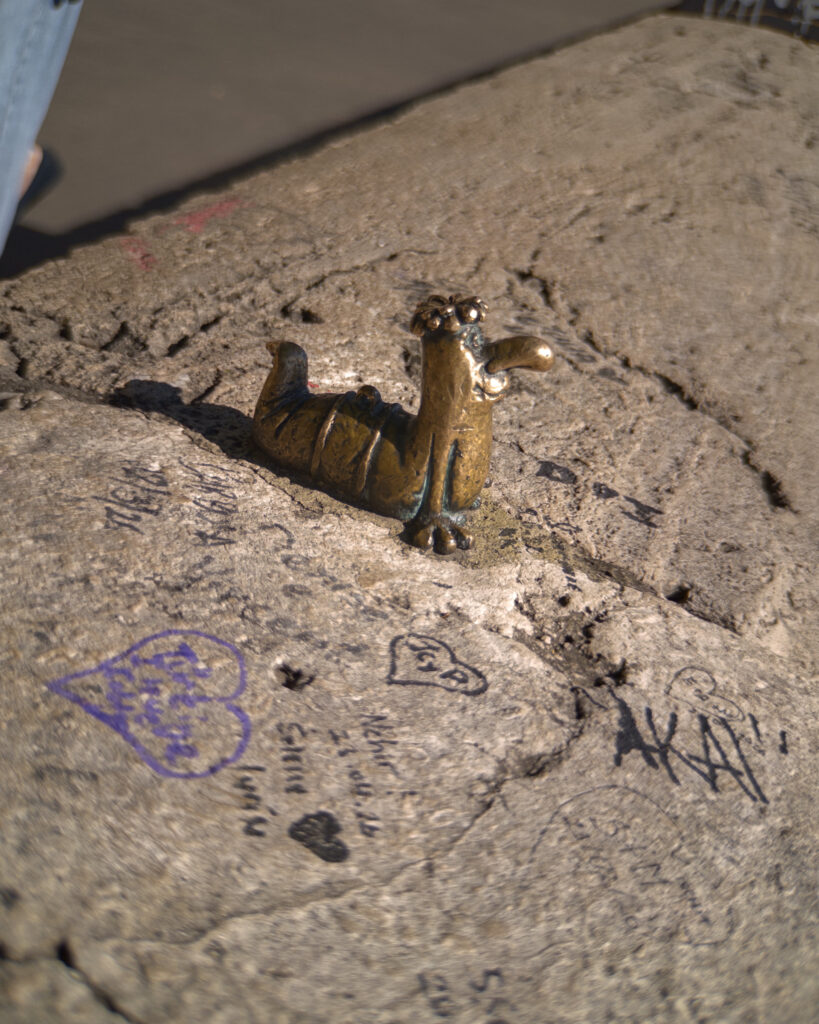
If you find yourself walking along the historic stone paths of the Bem Quay, break away from the sweeping views of the river for a moment and look closely at the old sidewalk ledge. There, perched proudly with his cheerful grin on his face, sits Chief Worm—Budapest’s most beloved mini-monument, the very first installation from Mihaly Kolodko. Born from a classic 1980s Hungarian animated series where he starred as the fiercely loyal bait-worm of a fisherman, this little bronze figure has officially retired from the hook. Instead, he now has what is arguably the most exclusive VIP view of the Hungarian Parliament, watching the riverboats glide along the Danube.
What makes Chief Worm truly legendary is the heartwarming community that has adopted him over the years. He is no cold piece of street art; he is a living part of the neighborhood fabric. When the bitter winter winds begin to blow, residents and passing fans secretly knit him tiny, vibrant wool scarves and colorful winter hats to keep him warm. In the hot summer months, he shines beautifully in the golden Hungarian sun. He stands as a whimsical, brilliant reminder that you don’t need a towering marble pedestal to hold the heart of a city—sometimes all it takes is a little nostalgia and a perfect view of the river.
THE UNDERCOVER GASTRONOME
The Statue Of Remy
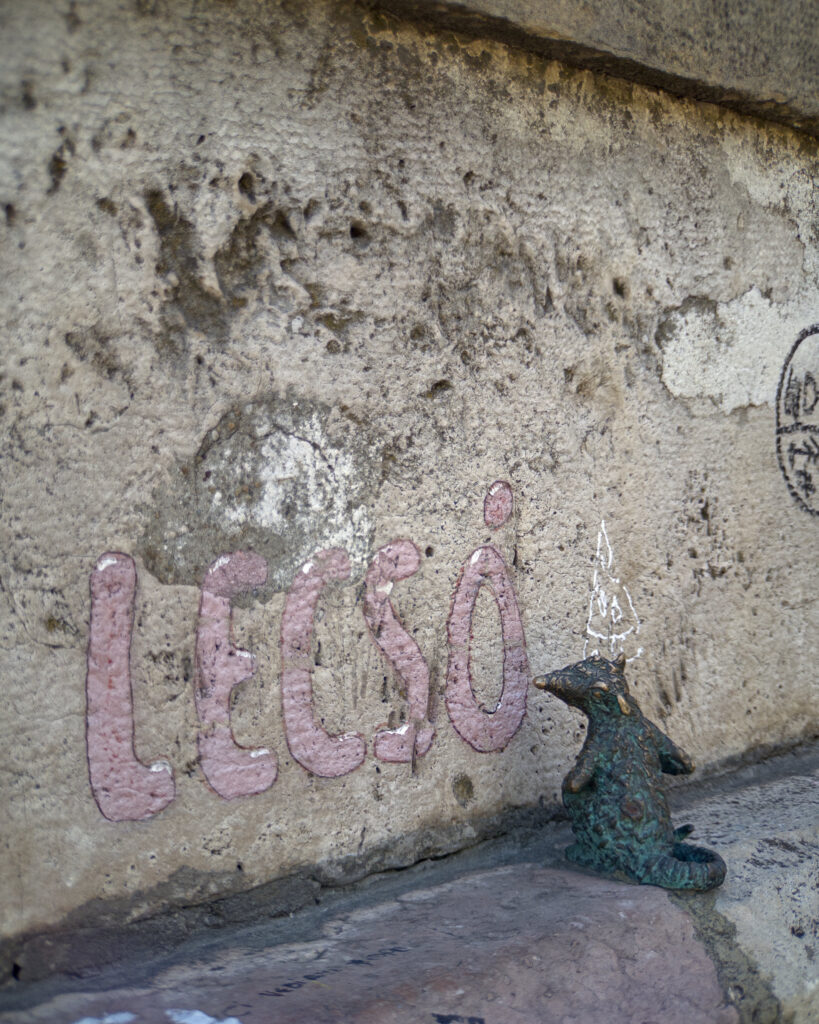
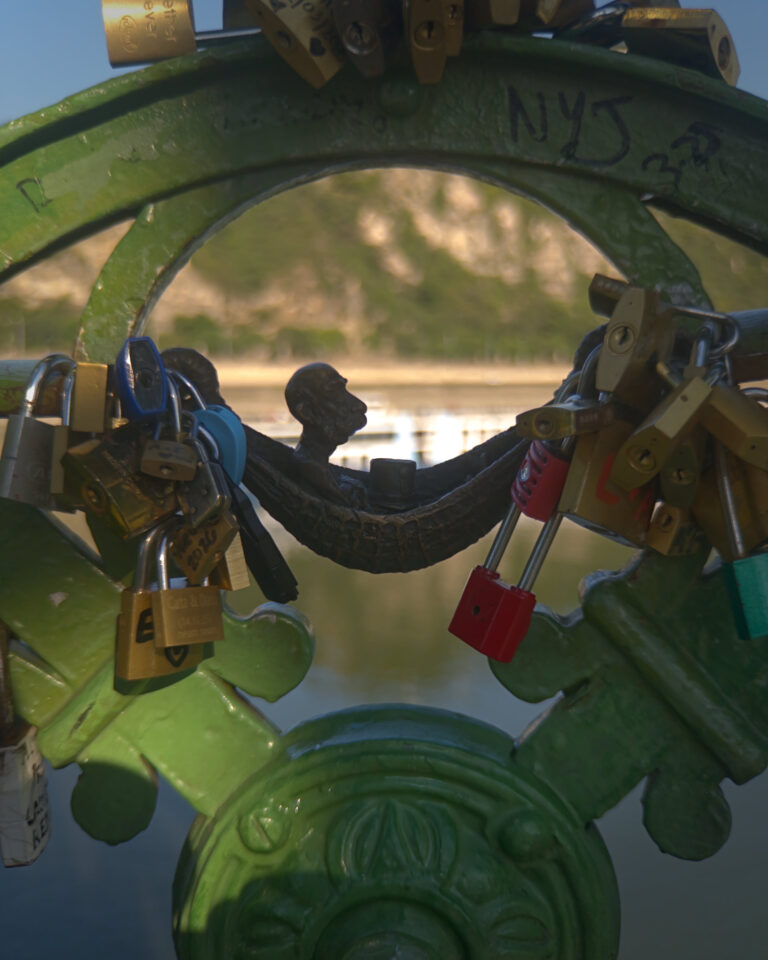
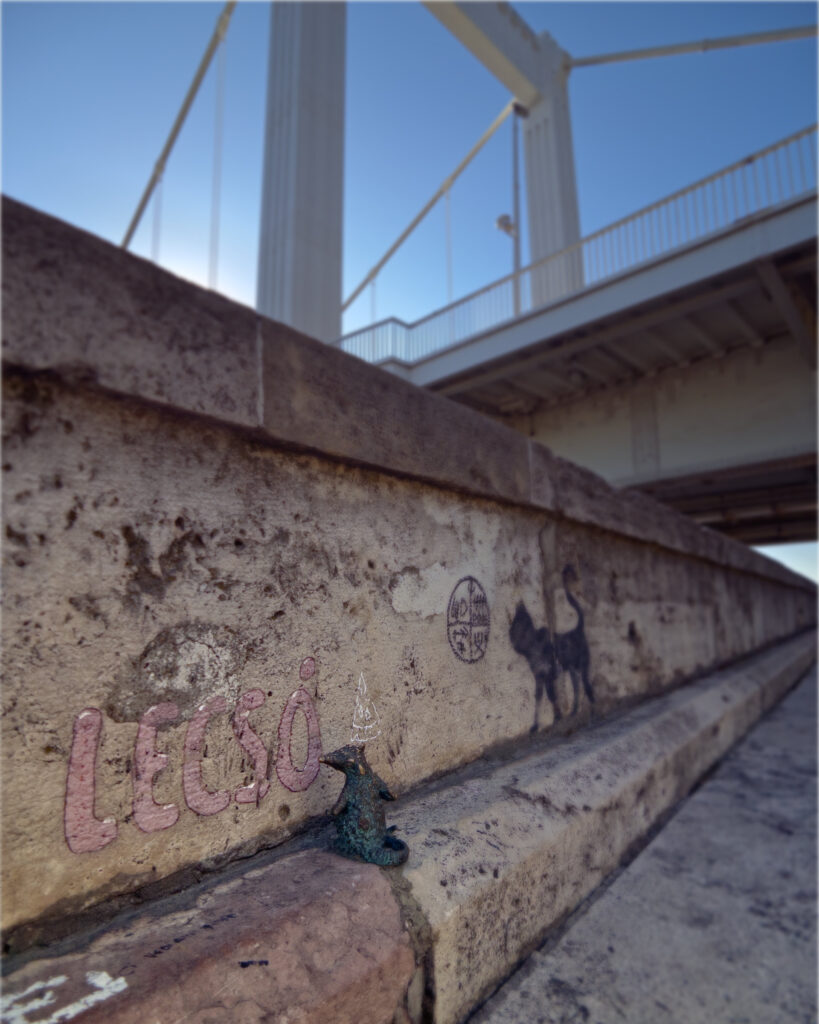
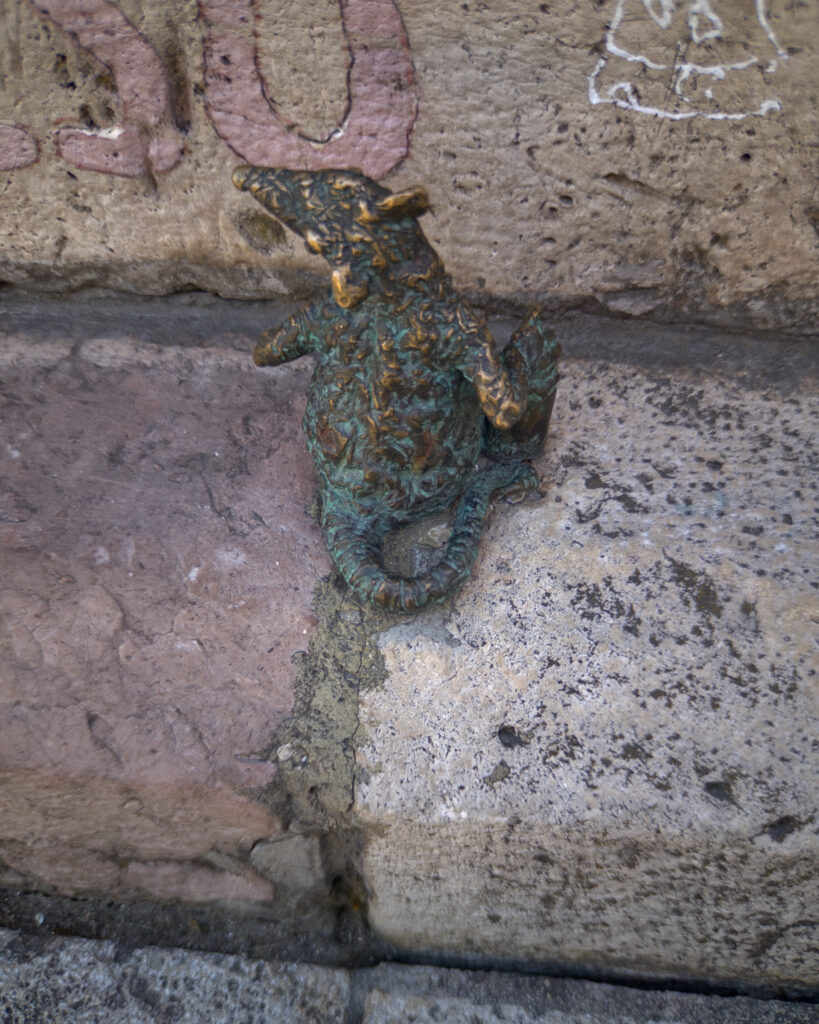
Hidden beneath one of Budapest’s bridges, the Elizabeth Bridge, a tiny bronze explorer waits in the shadows for those with a keen eye and a passion for culinary. It is Remy, everyone’s favorite animated French gastronome. We like to think that our stylish little friend has officially traded the romantic, rain-slicked banks of the Seine for the vibrant, deeply soulful energy of the Hungarian capital. He didn’t come for the grand tourist monuments; he was drawn here by the incredible aromas drifting from hidden kitchens and bustling food halls.
Remy serves as the ultimate undercover foodie, a whimsical tribute to the spectacular modern culinary renaissance taking place across Budapest. Positioned quietly away from the main avenues, he sits as a silent observer of the rich, multi-layered flavors that define the city—from the deep, smoky comfort of traditional paprika-spiced goulash to the sweet, caramelized perfection of fresh chimney cakes roasting over open coals. He is a charming reminder to always trust your senses, skip the obvious tourist traps, and understand that the most unforgettable ingredients of travel are usually the ones hidden just out of plain sight.
THE PUZZLE ON THE EMBANKMENT
The Rubik’s Cube
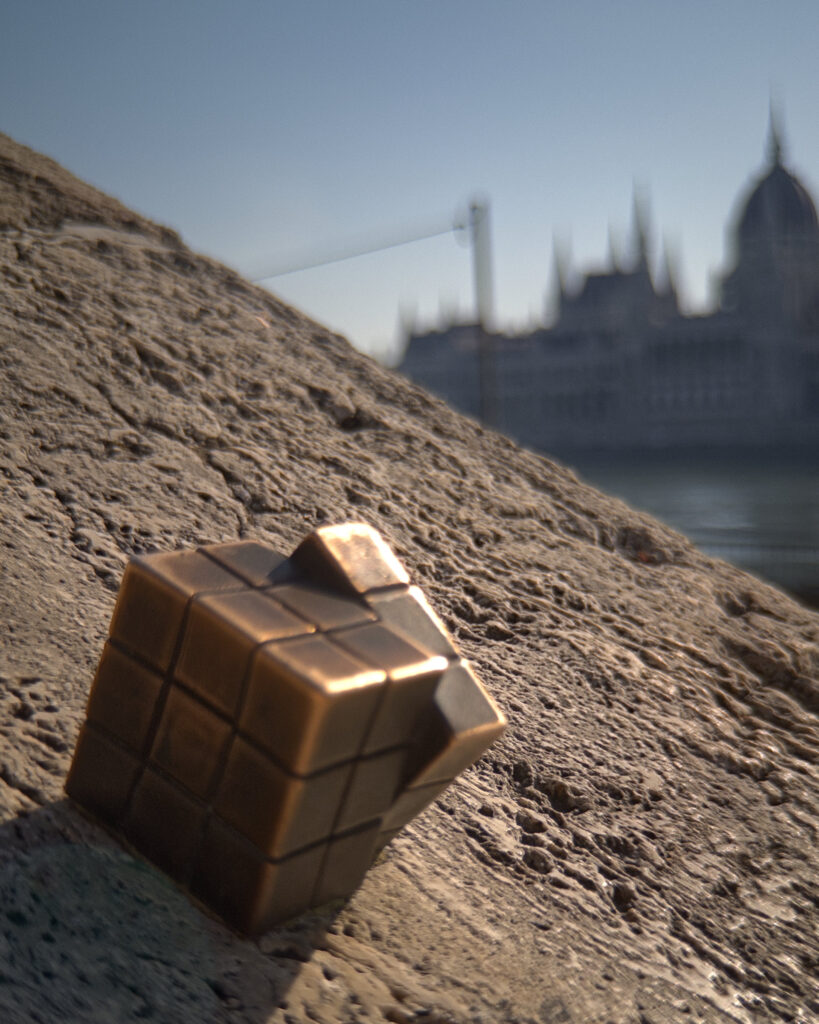
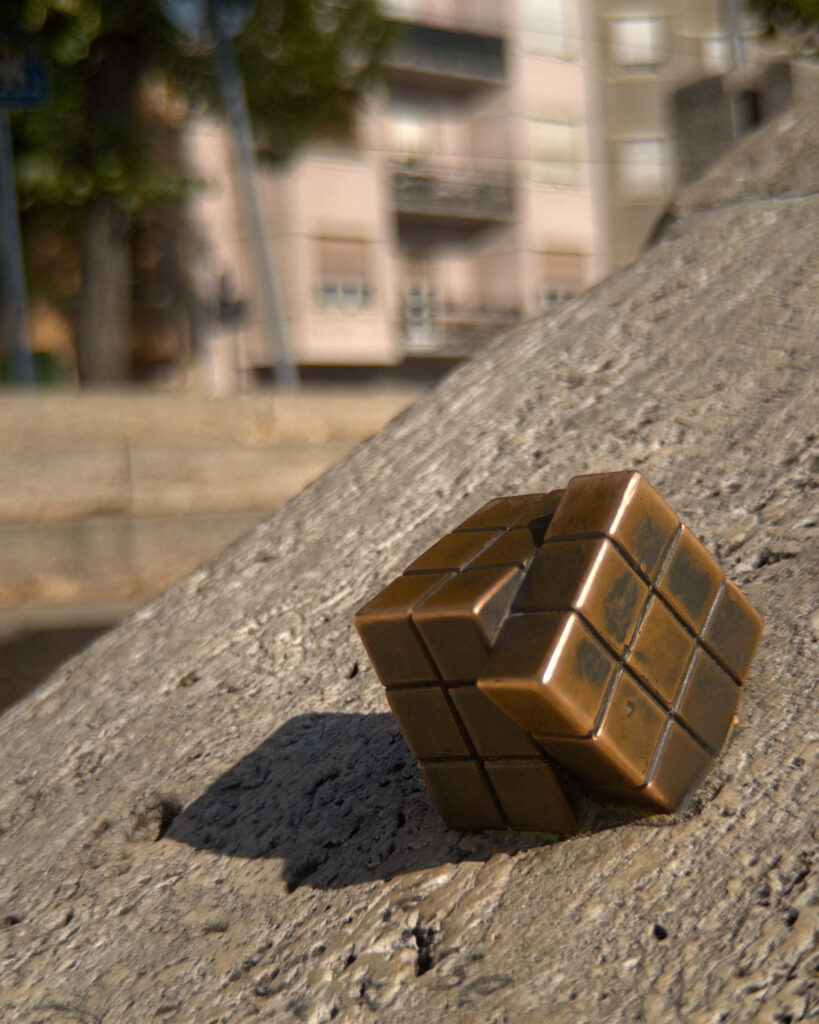
Wandering along the Buda riverbank near Batthyány Square, where the grand sweep of the Danube naturally pulls your gaze toward the magnificent Gothic spires of the Parliament, a much smaller marvel awaits those who know where to look.
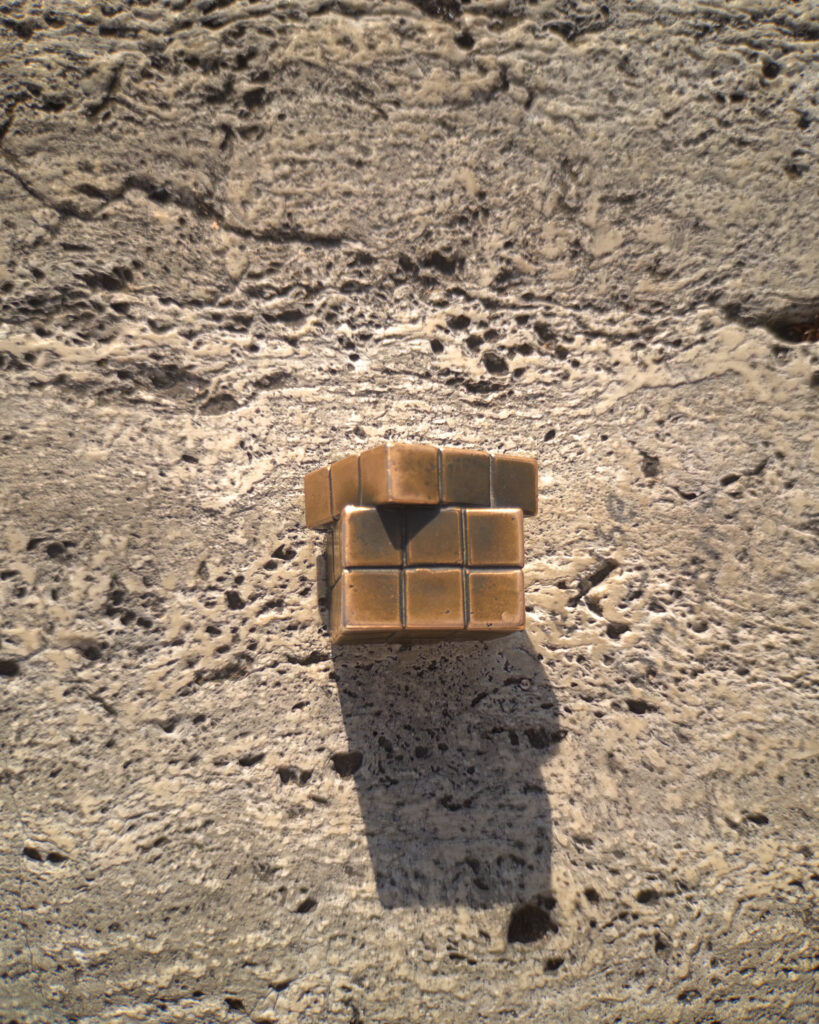
Tucked quietly onto the stone ledges of the embankment, there is a tiny bronze homage to one of the most brilliant symbols of Hungarian ingenuity: the Rubik’s Cube. Created by Ernő Rubik in 1974, this three-dimensional puzzle captured the fascination of the entire globe, yet Kolodko’s tribute grounds the invention right back in the heart of its birthplace.
There is a profound poetry in its placement. Resting seamlessly against the historic stone, this miniature sculpture is not sealed behind a glass display case; it is out in the open, part of the living fabric of the city. Discovering it adds a deeply tactile layer to your Budapest walk, serving as a beautiful, quiet reminder that sometimes the most complex global phenomena start with a simple spark of local imagination.
THE WEIGHT OF HISTORY
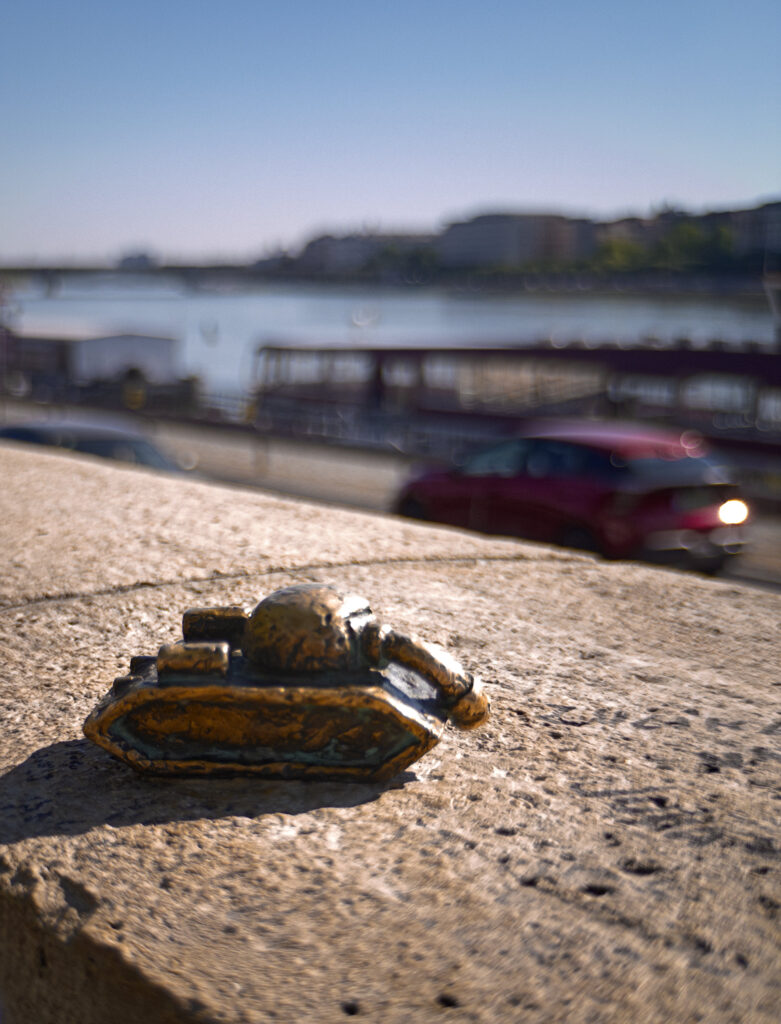
The Sad Tank
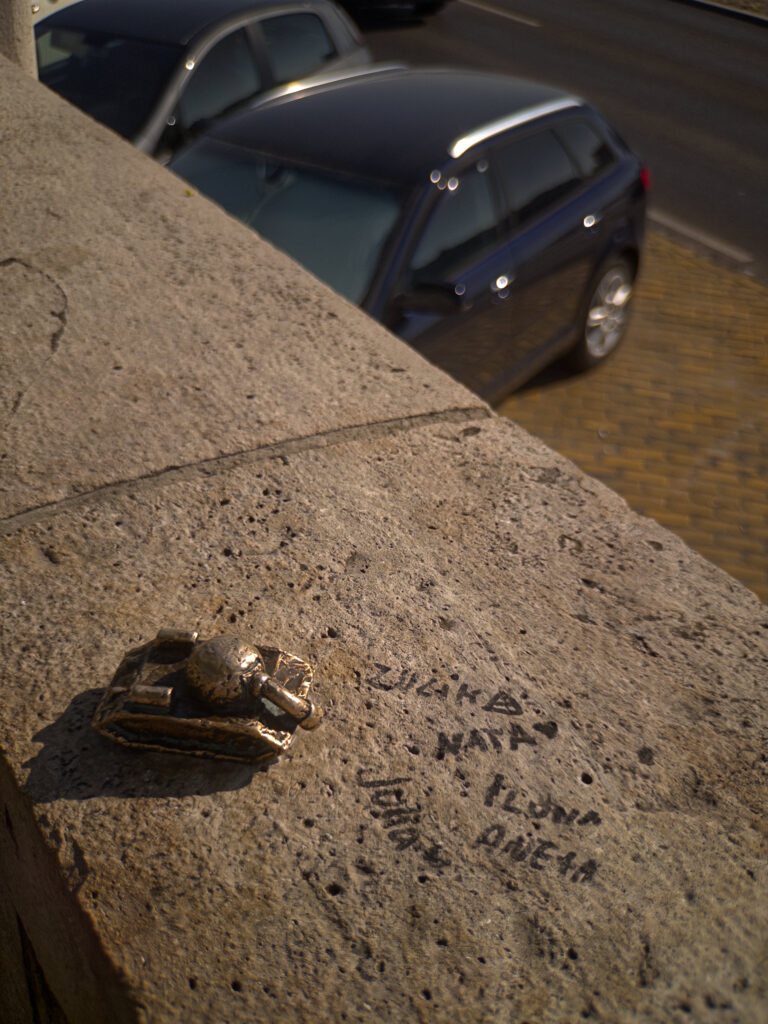
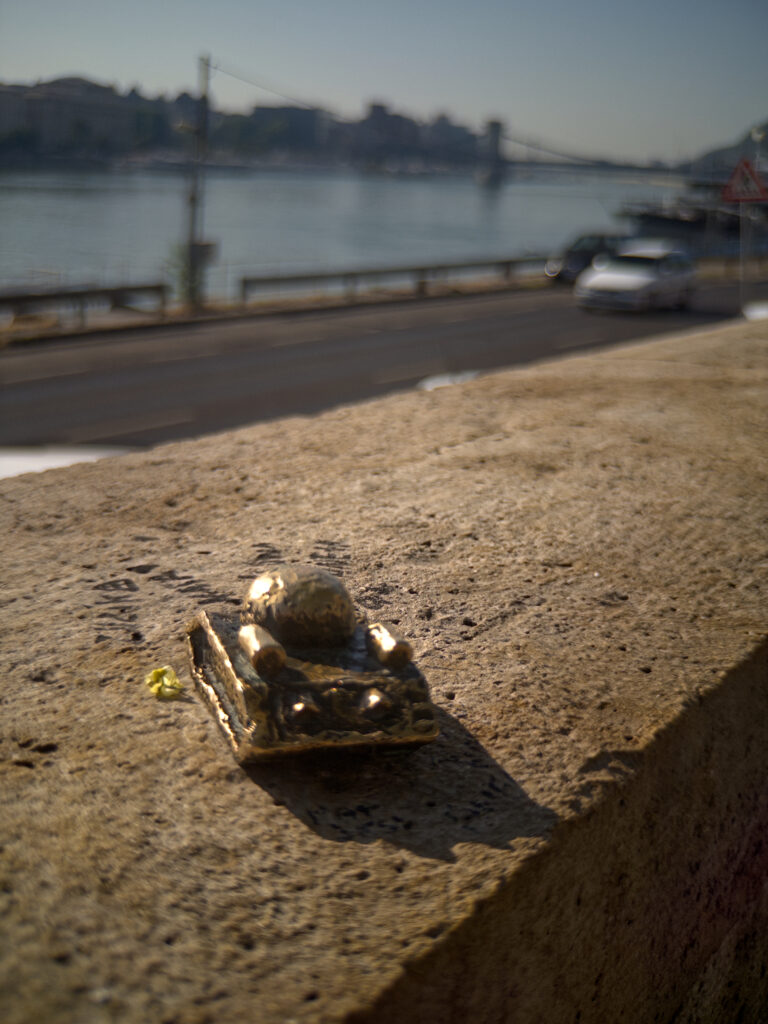
Just a short distance away on the Bem Quay, another hidden masterpiece showcases a vastly different tone in Kolodko’s bronze universe. The “Sad Tank” is a poignant, miniature memorial commemorating the 1956 Hungarian Revolution. With its gun barrel drooping harmlessly toward the pavement, the tiny military vehicle is completely stripped of its power, transforming an instrument of war into a gentle, thought-provoking symbol of peace and resilience.
Originally bearing the white-etched phrase “Ruszkik haza” (Russians go home), the sculpture is a brilliant example of how monumental historical weight can be elegantly captured in just a few inches of metal. Coming across this piece during an afternoon stroll invites a moment of powerful reflection. It perfectly captures the essence of our ongoing discovery in Budapest: the realization that the city’s deepest stories aren’t just found in textbooks or grand museums, but are quietly waiting to be unearthed along the everyday pathways we walk.
These small statues are reminders, that sometimes we need slow down with our lives and look down to find some treasure. And, the mini statues will be back in an other Issue of Hungary Discovered.