THE GUILD’S LEGACY
The Medieval Defenders
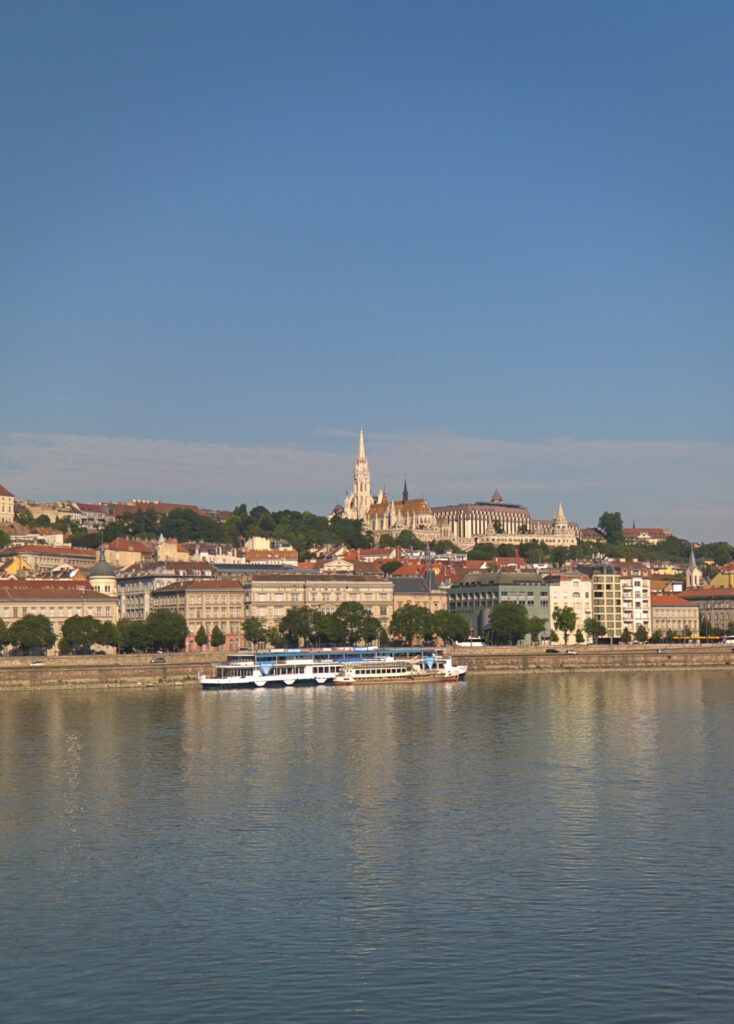
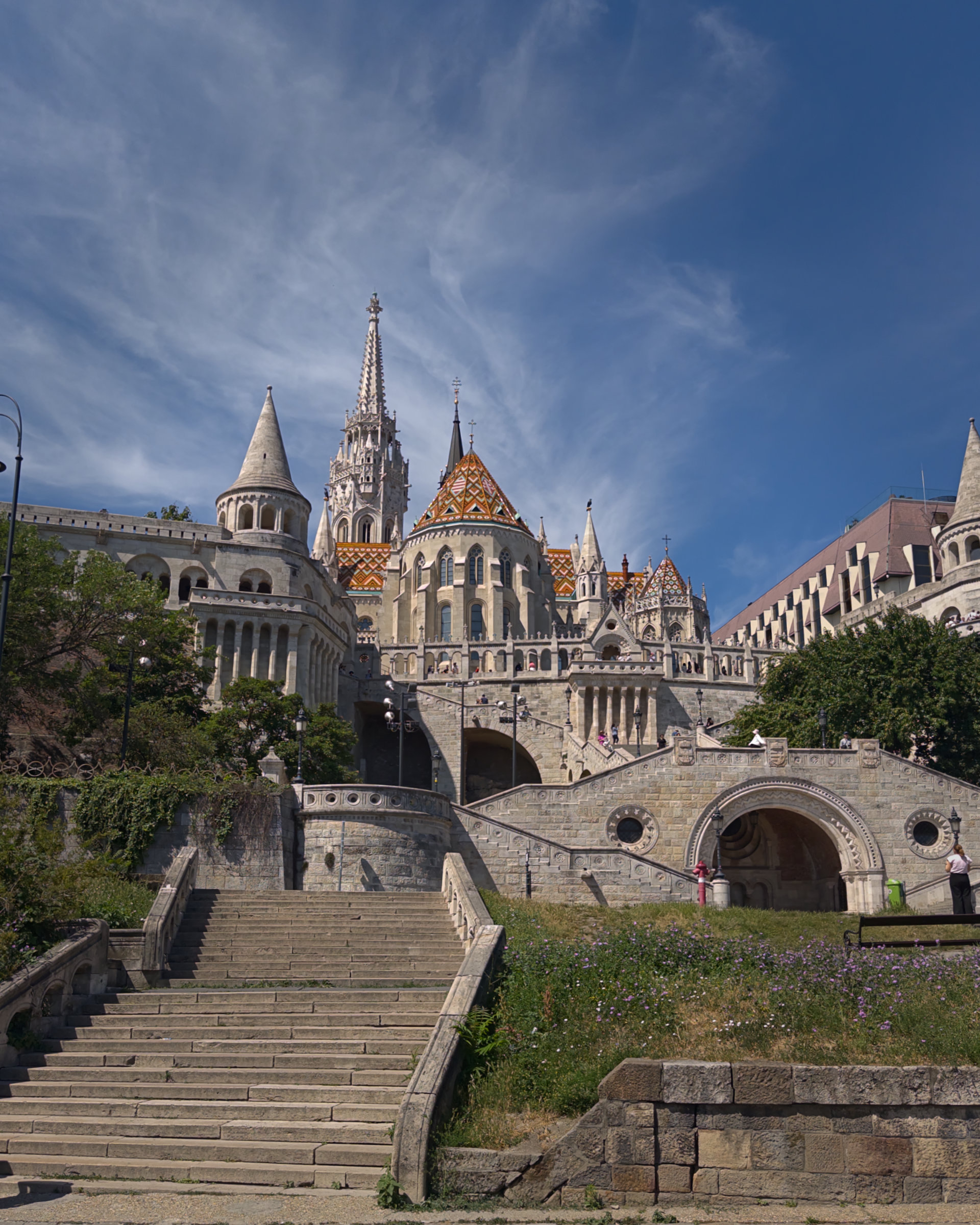
Long before the gleaming white terraces graced the Buda skyline, this steep stretch of the castle hill was a formidable defensive wall. In an era where the survival of the royal court depended entirely on impenetrable stone, this eastern ridge facing the river was a highly volatile frontline.
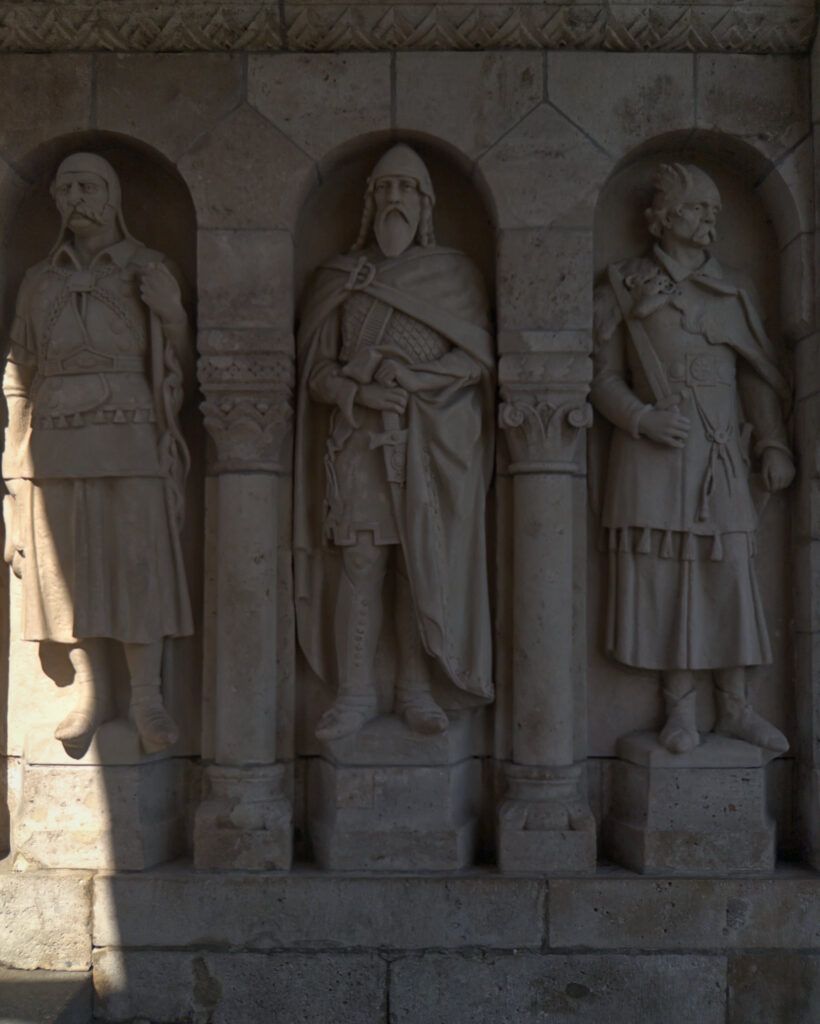
During the Middle Ages, the responsibility of defending this critical rampart fell to the local guild of fishermen, who lived and traded in the thriving Water Town (Víziváros) just below the hill. These were not aristocratic soldiers, but hardened men of the river who pulled their livelihood from the icy currents. Their daily lives were steeped in the harsh, physical realities of medieval commerce—hauling nets, repairing timber boats, and bartering in the crowded riverside markets. Yet, whenever warning bells rang across the valley, they were expected to abandon their trade and man the fortifications.
While today the bastion stands as a sweeping symbol of architectural romance, its name is a profound tribute to those resilient fishermen who stood watch over the freezing Danube, fiercely guarding the royal city through centuries of siege, shifting empires, and historical turmoil. To walk along these polished stones today is to trace the footsteps of a working-class guild whose quiet sacrifices kept the historical heart of Hungary beating.
MONUMENT OF A NATION
The Millennium Vision
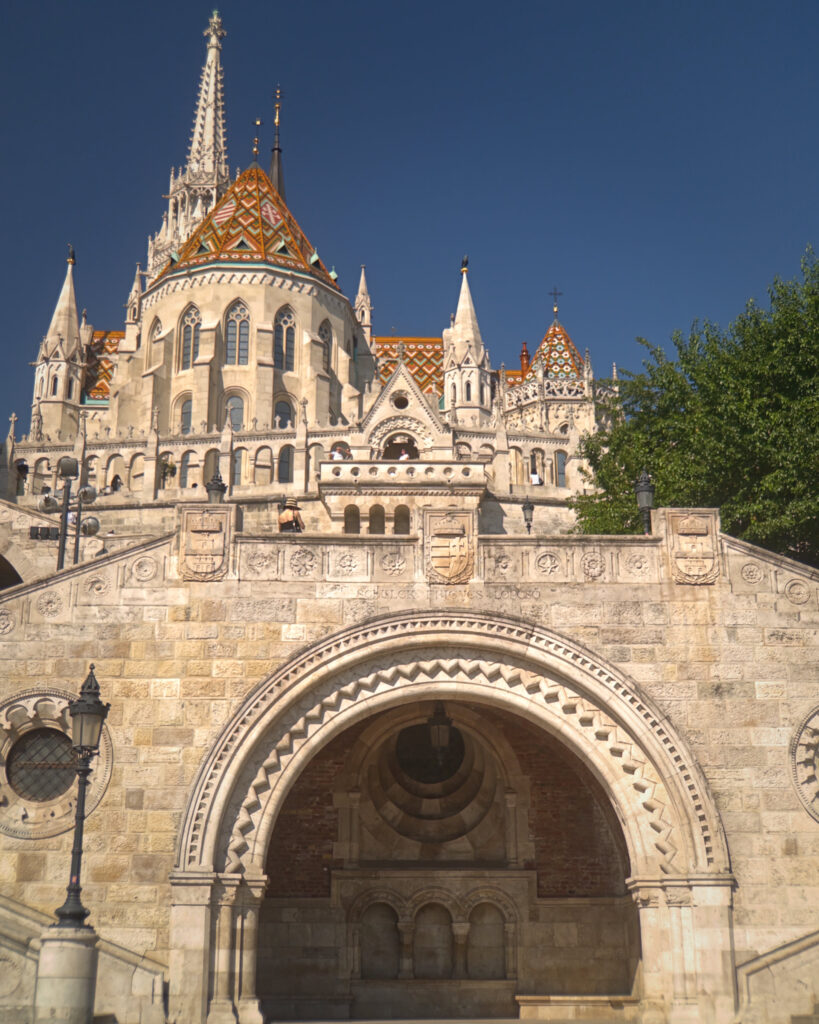
As Hungary approached its grand millennial anniversary in 1896, celebrating one thousand years since the founding of the state, an unprecedented wave of cultural confidence and golden-age prosperity swept through the capital. Budapest was expanding into a global metropolis, and visionary architect Frigyes Schulek was tasked with transforming the crumbling historic walls of the castle district.
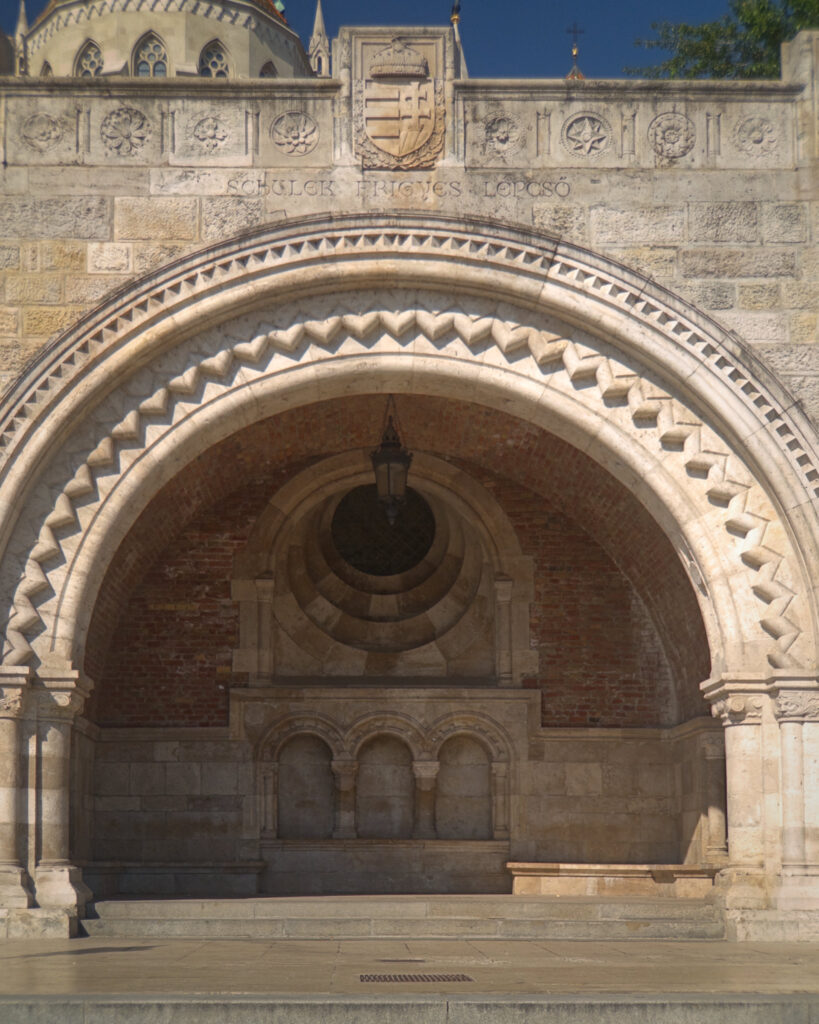
Rather than simply repairing a relic of war, he envisioned a completely new kind of public space. He designed a breathtaking neo-Romanesque masterpiece, explicitly shifting the structure’s purpose from military defense to an elegant, panoramic celebration of the capital. The design required years of carving, integrating sweeping staircases, vaulted cloisters, and hidden romantic alcoves that invited citizens to linger and admire their rapidly modernizing city.
The seven brilliant stone towers you see today are not merely decorative; they intentionally symbolize the seven founding Magyar chieftains who led their tribes into the Carpathian Basin in 895. By turning these ancient nomadic leaders into towering architectural crowns, Schulek anchored the nation’s origin story in stone. It is a sprawling, open-air monument woven directly into the modern fabric of Budapest, seamlessly bridging the mythic past with the architectural triumphs of the 19th century.
THE WHITE TOWERS
Fisherman’s Bastion
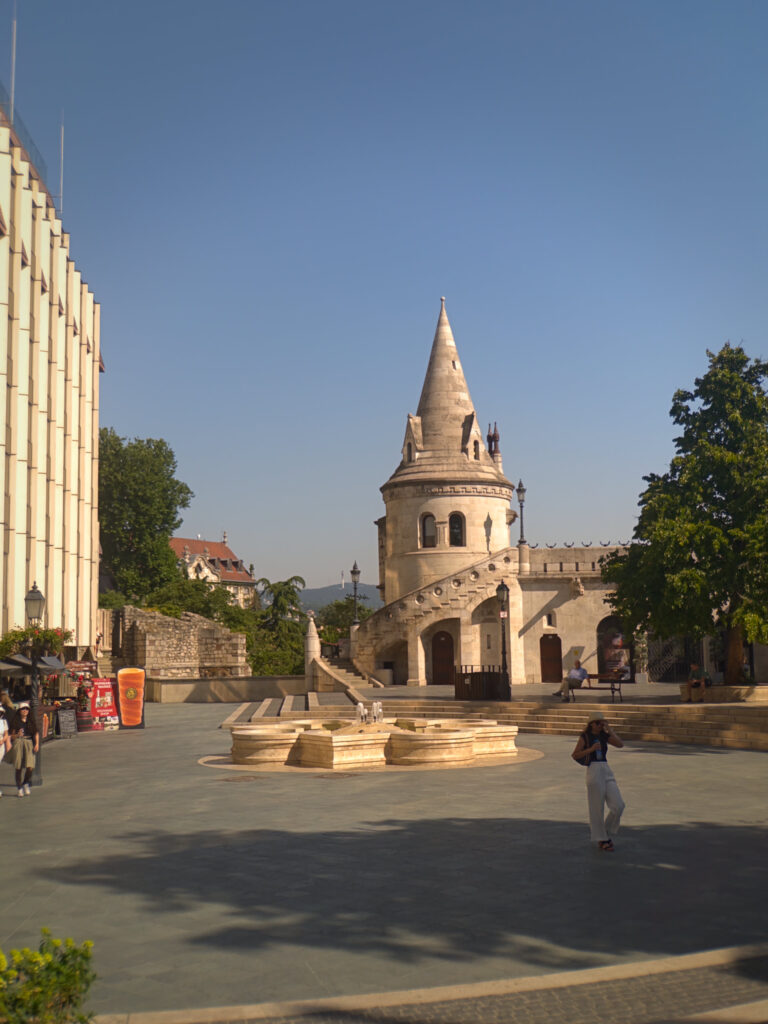
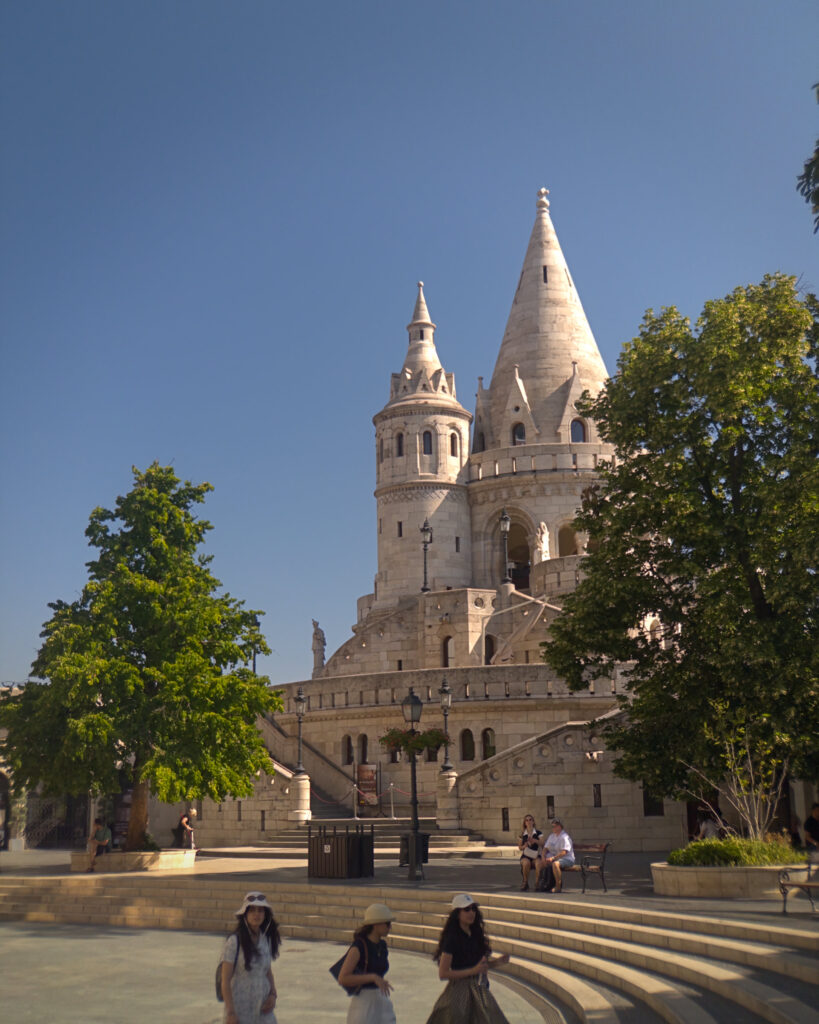
Arriving at Fisherman’s Bastion just as the morning mist begins to lift off the Danube is an absolute revelation. In these quiet, suspended hours before the city fully wakes, the vast crowds are absent, leaving only the sound of your own footsteps echoing off the intricate masonry.
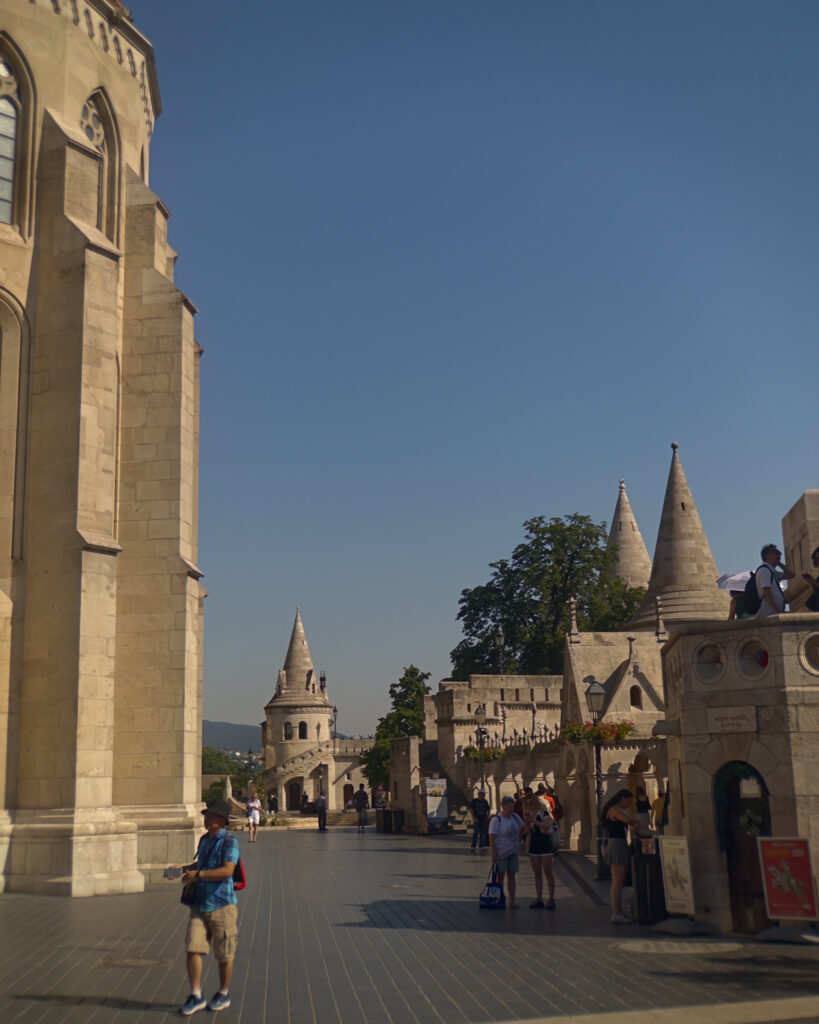
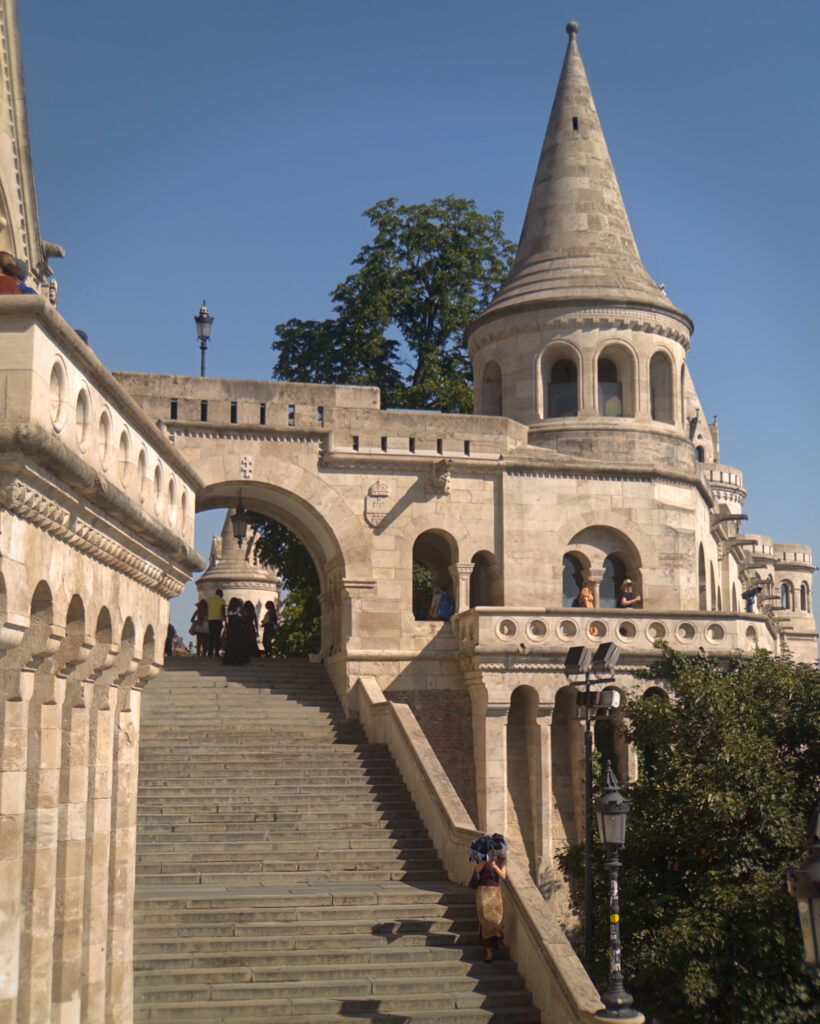
The sweeping neo-Romanesque terraces and white stone arcades seem to softly glow in the early, diffused light, absorbing the cool blues and soft pinks of the Hungarian dawn. Every balustrade and carved pillar reveals an obsessive level of craftsmanship. Designed not for military defense, but for pure architectural poetry, the seven gleaming towers stand as silent, majestic tributes to the founding Magyar tribes.
They rise above the river like a fairytale crown, setting an atmosphere of profound elegance that instantly transports you to another era. Standing beneath the main conical tower as the morning light breaks across the horizon, you are immersed in an environment that feels less like a historical ruin and more like an open-air stage meticulously built to showcase the breathtaking scenes of Budapest.
FRAMING THE CITY
The Panoramic Arches
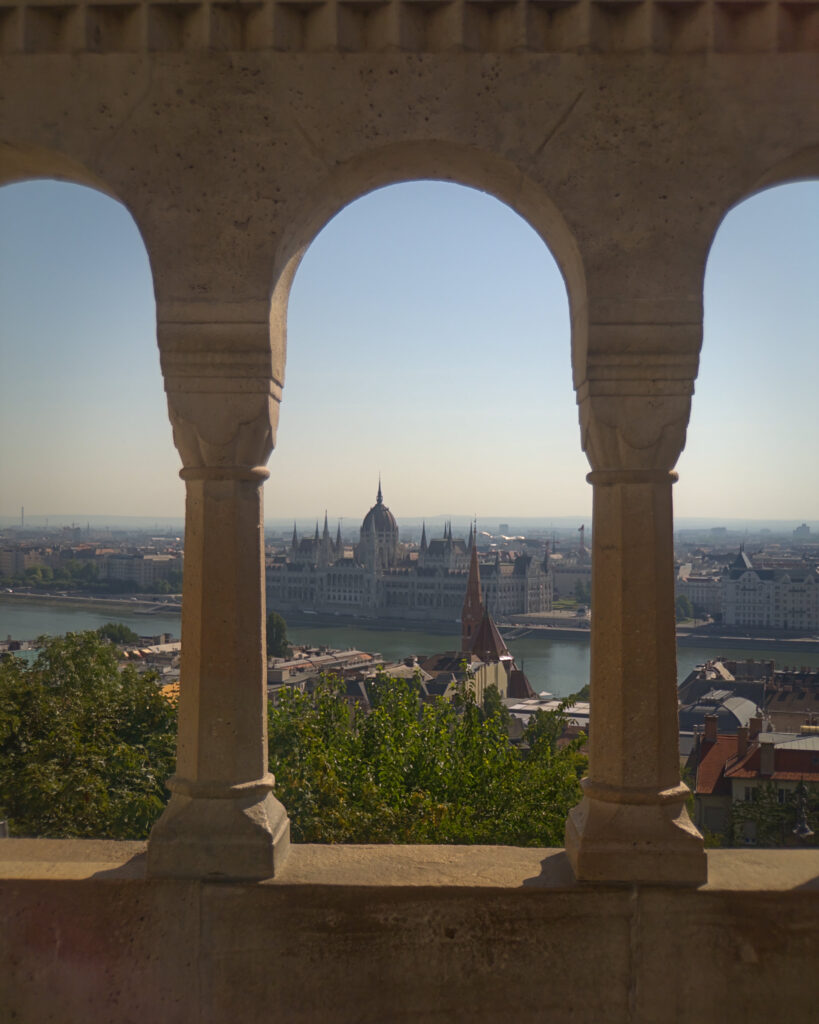
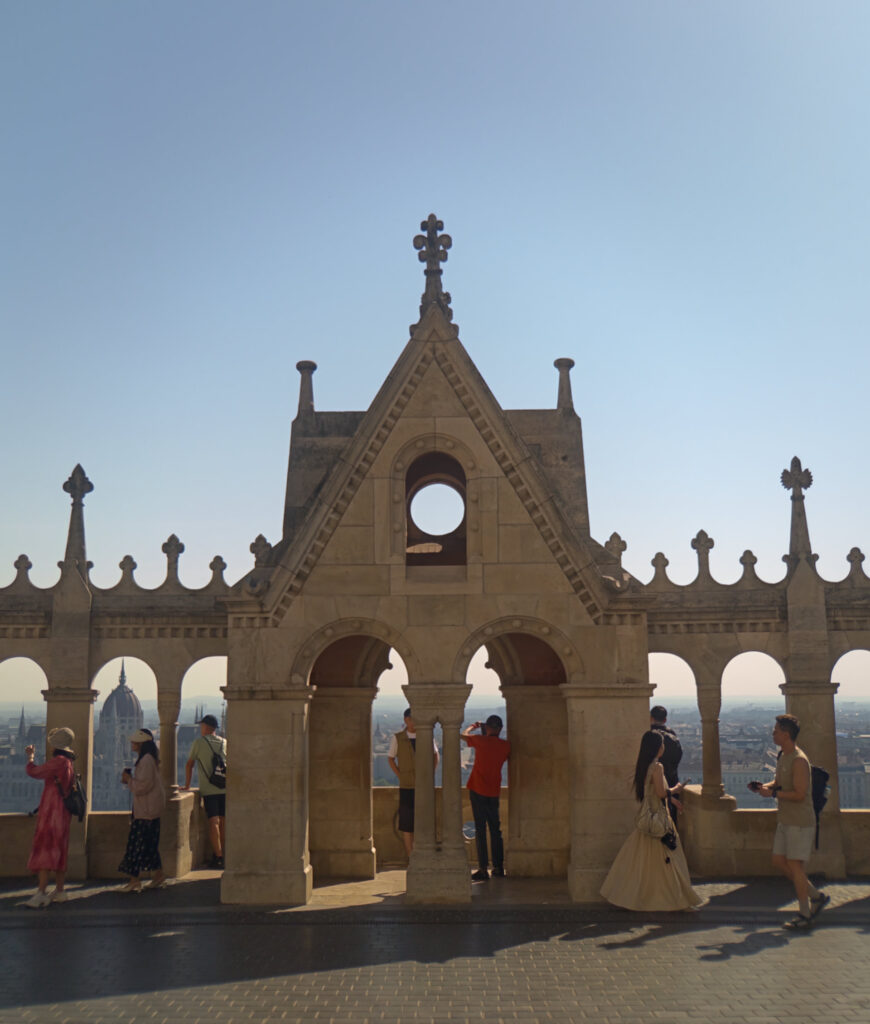
Walking along the elevated ramparts, every carved archway serves as a perfectly designed frame for the city below. Schulek understood that the true masterpiece of this location was not just the structure he was building, but the unparalleled view it commanded.
Looking through the ornate stone windows, the sweeping bend of the Danube and the grand, commanding silhouette of the Parliament building unfold like a living painting. The contrast is deeply moving: in the foreground, you have the warm, tactile intimacy of the carved limestone, while in the background, the vast, expansive scale of a major European capital stretches out toward the horizon.
You can trace the majestic bridges crossing the water and watch the golden light crawl slowly across the copper domes of Pest. It is a cinematic vantage point where the rushing, modern heartbeat of Pest is viewed from the quiet, elevated elegance of historic Buda, offering a moment of absolute stillness above the capital. It is here, leaning against the cold stone, that one truly understands the geographical and spiritual divide of the two cities, perfectly unified by the sweeping ribbon of the river below.
Want to hear a secret?: In general between 9 am and 9 pm the top level of the bastion has an entry fee, but if you arrive before 9 am or after 9 pm, you are gonna be able to check out the top for free, with way less people to share it with.